BEST TARMAC DRIVEWAYS ALTRINCHAM
Domestic & Comercial
We offer expert tarmac driveways for both domestic & comercial clients, no job is too big or small.

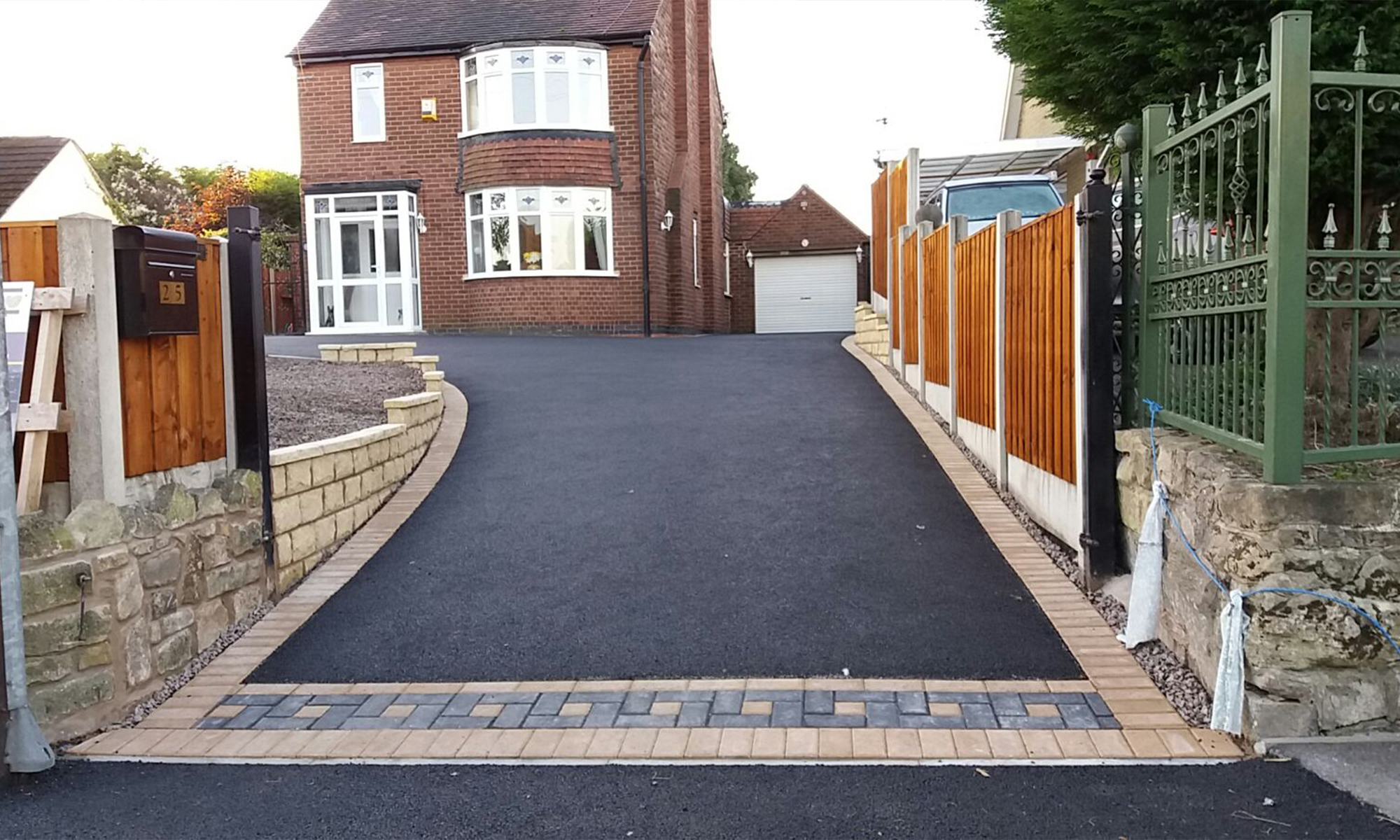
Tarmac doesn’t get the attention it deserves. Browse any home improvement forum or local Facebook group and you’ll find homeowners agonising over resin aggregates and block paving patterns, while tarmac quietly gets on with what it does best: providing a hard-wearing, professional-looking driveway surface that handles everything the north-west weather can throw at it, for a fraction of the cost of more fashionable alternatives.
This isn’t a pitch for tarmac over everything else. It’s something more useful than that: an honest assessment of what tarmac genuinely delivers, where it excels, where its limits are, and how to make sure that if you choose it, you get an installation that lasts twenty years rather than five. By the time you’ve read this, you’ll know more about tarmac driveways than the vast majority of Altrincham homeowners, and that knowledge will save you time, money, and a frustrating repeat job.
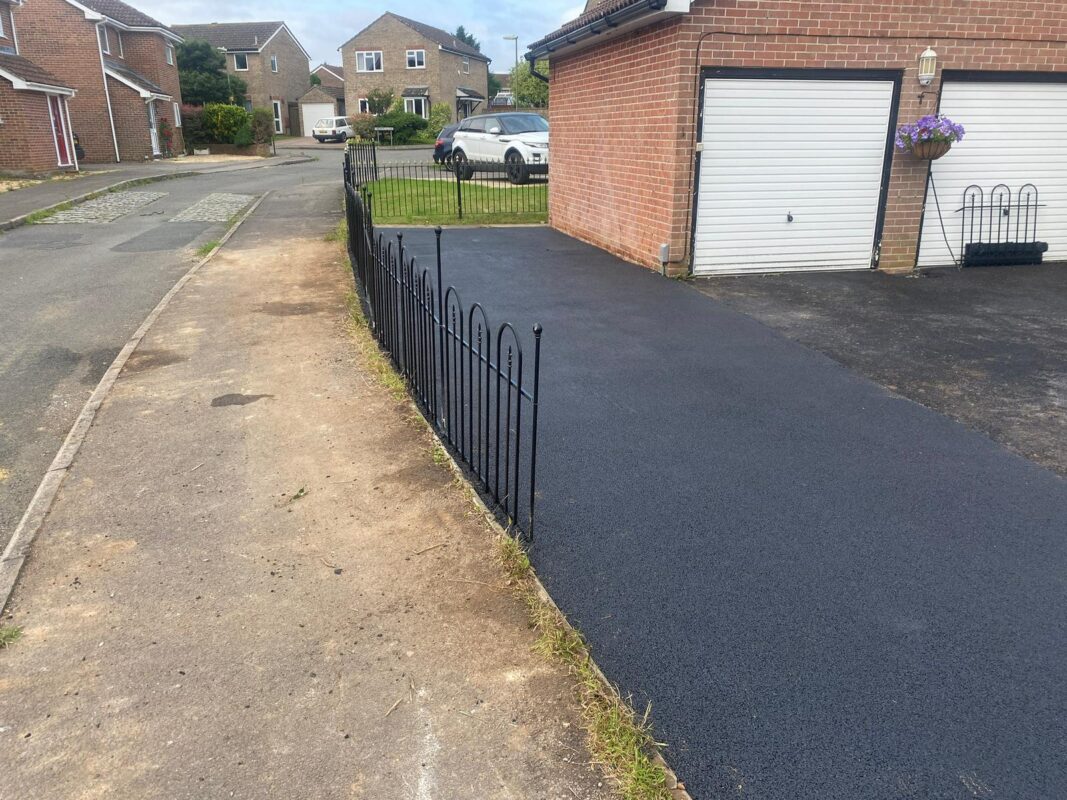
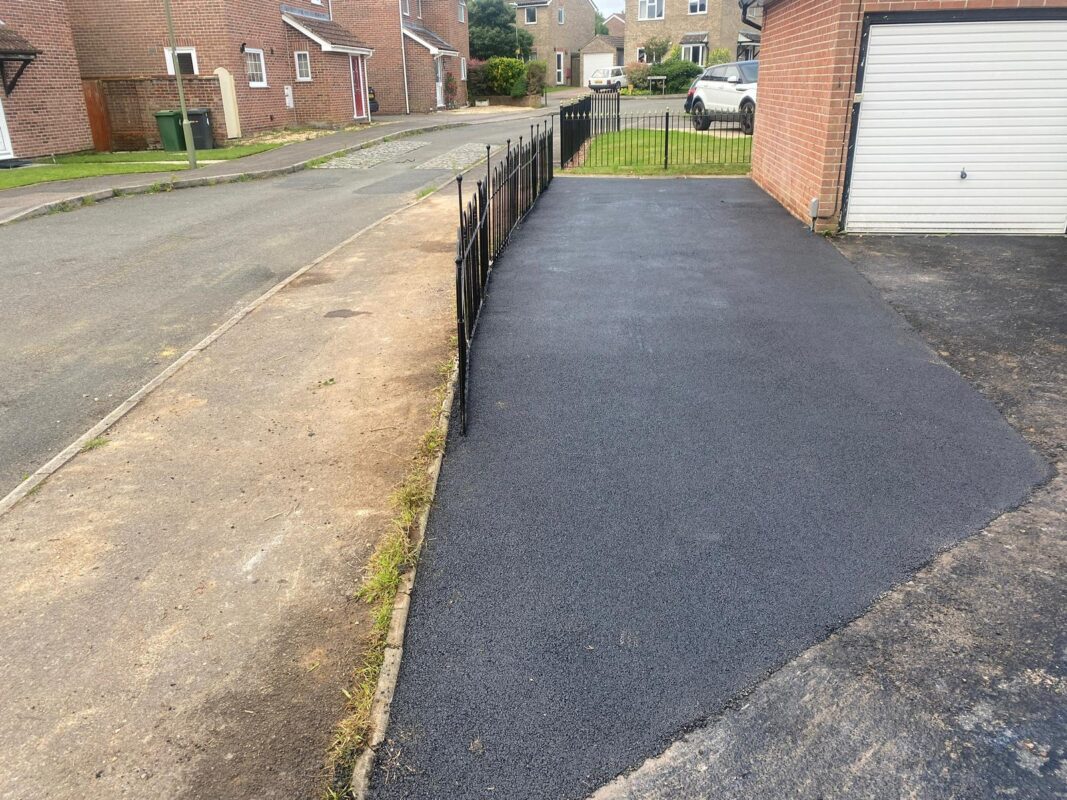
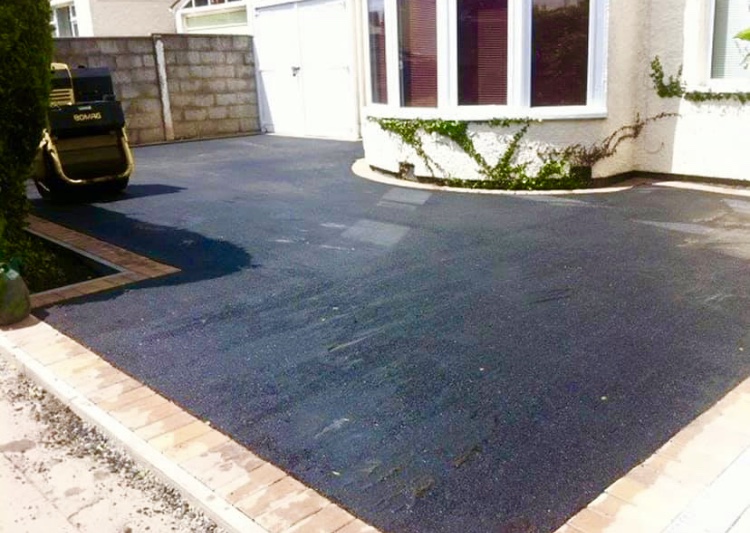
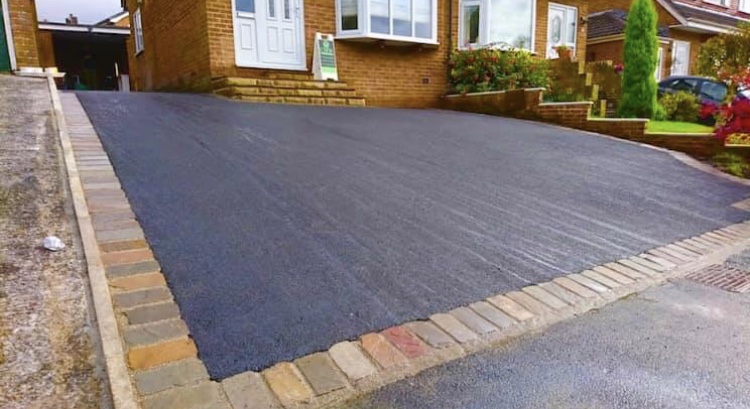
There’s a lingering perception in some circles that tarmac is the budget option, the choice you make when you can’t afford something better. That perception is outdated, and it’s costing homeowners money.
Tarmac driveways installed to the correct specification, on a properly prepared sub-base, with good edge restraints and appropriate drainage, consistently outperform other surfaces on the metrics that matter most to most homeowners:
The homes along the older residential streets of Timperley, Sale, and the working-class parts of Altrincham that have had well-maintained tarmac drives for 30 years tell you more about the material’s real-world performance than any brochure can.
Before choosing any driveway surface it’s worth understanding what you’re actually buying. With tarmac, the basics are straightforward, but the details matter.
The material used for domestic driveways is more precisely called dense bituminous macadam (DBM) or, more commonly, asphalt. It’s a mixture of:
The term “tarmac” technically refers to a specific historic material (tar macadam, using coal tar rather than bitumen) that is no longer used on domestic driveways. In practice, everyone, contractors, homeowners, and suppliers, uses “tarmac” as the generic term for all bituminous driveway surfaces, and that’s the convention followed throughout this guide.
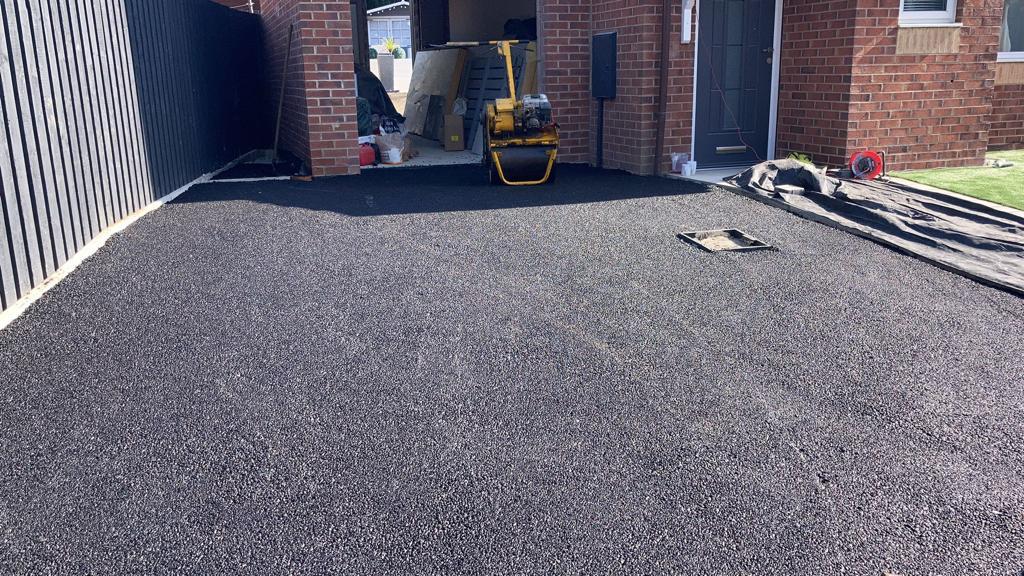
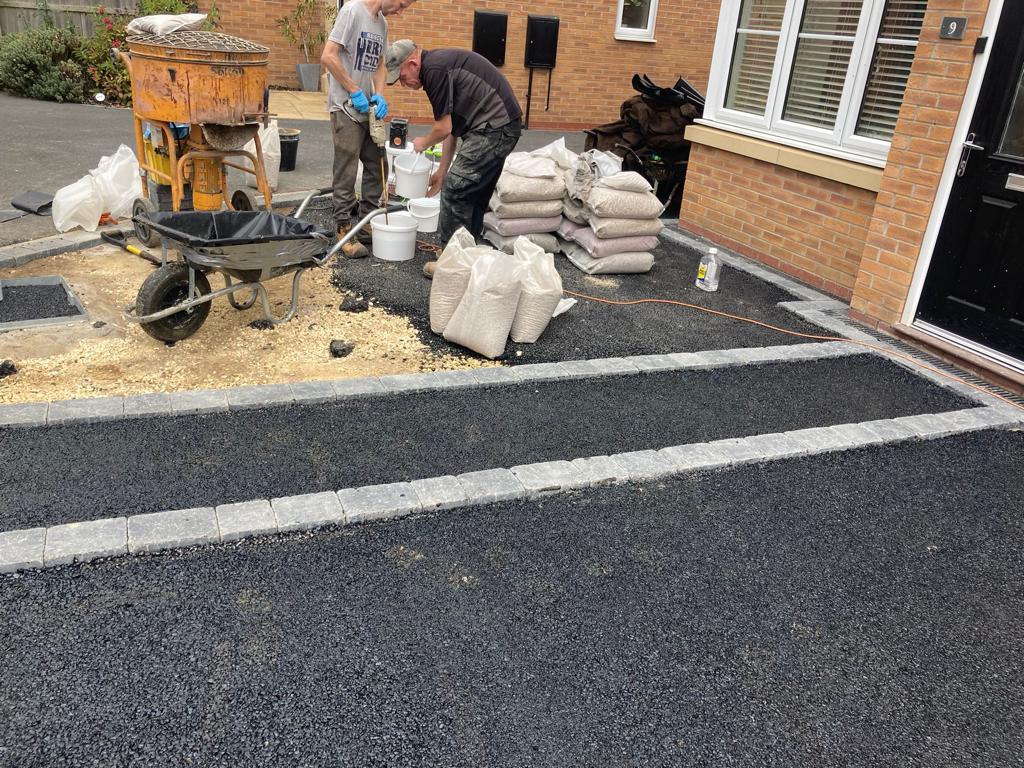
Tarmac must be mixed and delivered hot, typically at 150–180°C, and laid before it cools. The process on a domestic driveway looks like this:
The entire process from first material delivery to usable driveway is typically completed within a single working day for a standard domestic installation. This speed is one of tarmac’s most practical selling points for homeowners who need to minimise disruption.
You’ll sometimes hear contractors refer to “macadam” separately from “tarmac”. In practice:
For a domestic driveway enquiry in Altrincham, these terms all refer to the same product category. What matters is the specification, aggregate size, binder content, and laid depth, rather than the precise terminology.
This is tarmac’s strongest card, and it genuinely matters in Greater Manchester. The north-west climate, persistent rain, regular temperature cycling through zero in winter, and occasional heavy frost, creates specific demands on driveway surfaces.
Tarmac handles freeze-thaw cycles better than most alternatives because the surface has some inherent flexibility. While resin bound surfaces and concrete can crack when ground beneath them moves seasonally, a correctly specified tarmac surface will flex fractionally rather than fracturing. Block paving manages this differently, individual blocks move independently, but tarmac’s monolithic flexibility is a genuine advantage in the clay-heavy soils found across parts of Timperley, Sale, and the Bollin Valley corridor.
Persistent rain is also less problematic for tarmac than it might seem. A properly graded tarmac surface sheds surface water efficiently to the edges. With good drainage channels at the perimeter, standing water, the most common cause of surface deterioration, is effectively managed.
A standard single or double-car domestic driveway in Altrincham is typically complete in a single day. Materials arrive hot and ready, laying is fast, and the surface is available for light use within hours of completion and full vehicle use within 24 hours.
This makes tarmac the right choice when timing matters, before a house sale, ahead of a family event, or simply when the idea of having your front garden under disruption for three or four days is genuinely inconvenient.
Tarmac’s cost advantage is most pronounced on larger driveways. For a single-car drive of 25–30 m², the price difference between tarmac and block paving is meaningful but not dramatic. For a large driveway of 60–80 m², or a commercial forecourt, tarmac’s efficiency at scale makes it the clear financial winner, often at half the cost of an equivalent block paving or resin installation.
This is why tarmac dominates commercial applications, car parks, industrial units, service yards, and why large residential plots in areas like Hale Barns and Bowdon with long, wide driveways often opt for tarmac over premium alternatives that would carry an extremely large price tag.
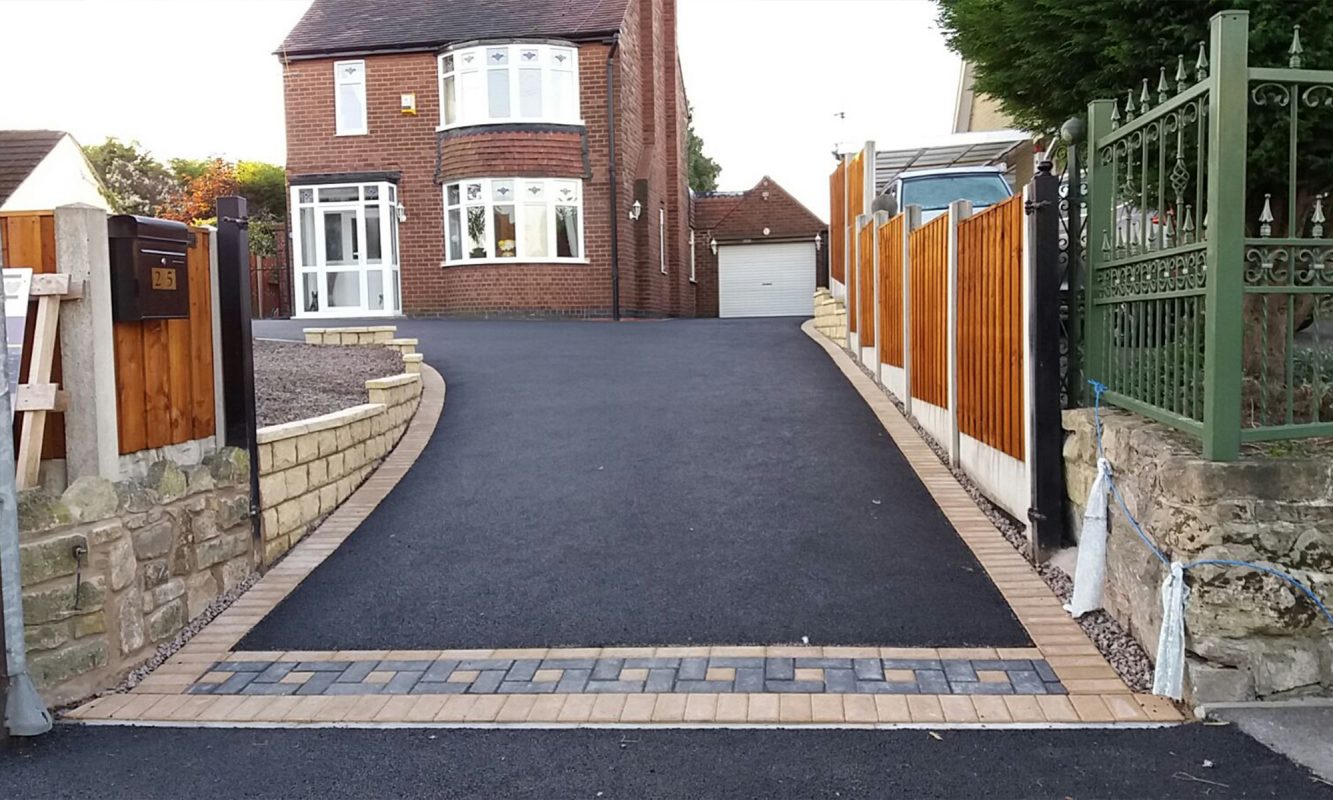
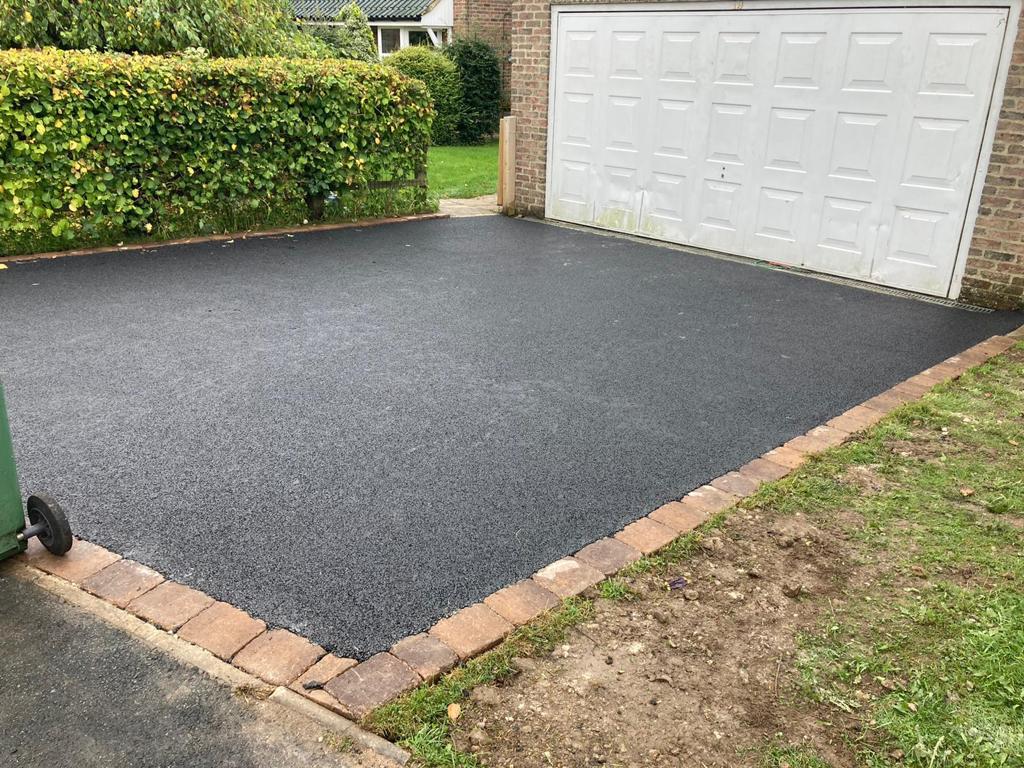
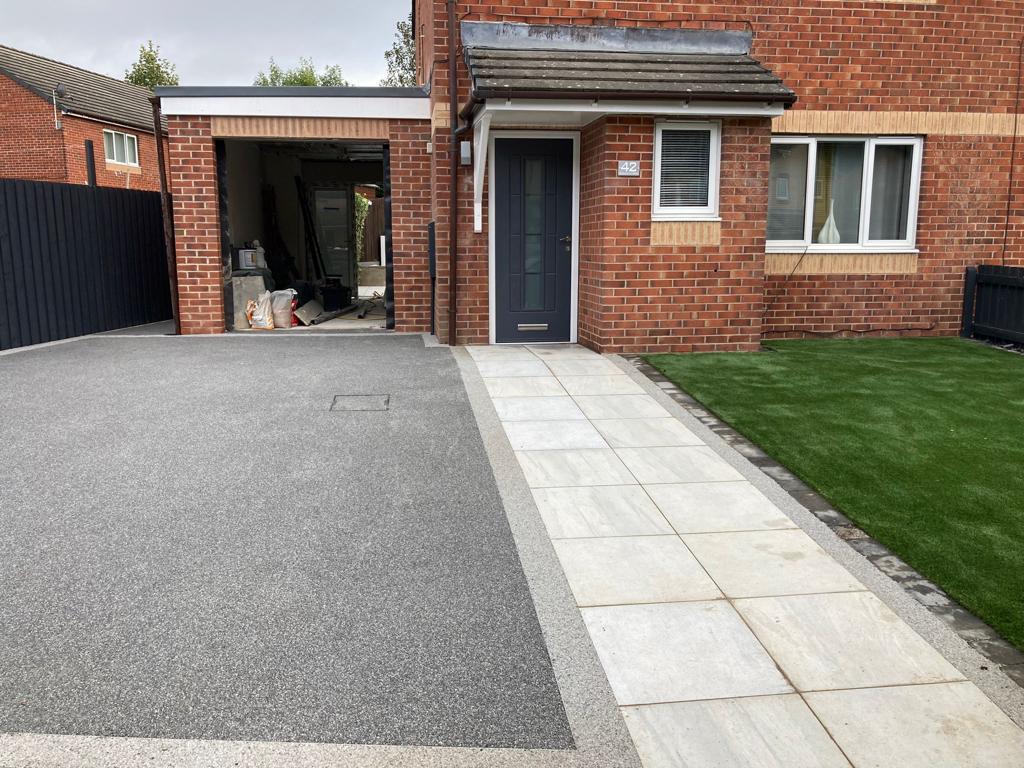
One of the most popular approaches to tarmac driveways in Altrincham combines a tarmac field with a block paving border. A single or double course of contrasting block paving around the perimeter, typically in charcoal or brindle, gives the driveway visual definition and a finished, considered look that pure tarmac cannot quite match on its own.
This combination delivers the best of both worlds for many homeowners: tarmac’s cost and practicality across the main area, with a kerb-appeal boost from a quality block paving edge detail. It’s particularly popular on the bay-fronted semis and detached properties typical of Altrincham’s residential streets, where a completely plain black forecourt can look slightly flat against a characterful house front.
The sub-base is the foundation everything else depends on, and it’s the element most commonly compromised by contractors trying to undercut on price. A properly installed tarmac driveway requires:
For a new installation:
For an overlay onto an existing tarmac:
Skimping on the sub-base is the single most common reason domestic tarmac driveways fail within five years. A thin surface layer over inadequate hardcore will show cracking, rutting under vehicle loads, and edge failure within a couple of years, especially on the clay-prone ground common to many Altrincham gardens. If a quote seems unusually low, excavation depth is almost always where the saving is hiding.
Tarmac is an impermeable surface, water cannot pass through it. This has two practical implications for Altrincham homeowners:
1. Planning consideration for front gardens Replacing a front garden surface with an impermeable material covering more than 5 m² technically requires either planning permission from Trafford Council or a drainage solution that prevents water discharging to the public highway. In practice, most tarmac installations include:
A reputable contractor will discuss this before quoting and include appropriate drainage in their specification. If they don’t raise it, you should.
2. Practical surface water management Even beyond the planning consideration, proper drainage makes a tarmac drive significantly more durable. Water that pools on the surface softens the bitumen over time and accelerates deterioration. A correctly graded surface that sheds water promptly extends the lifespan of the installation meaningfully.
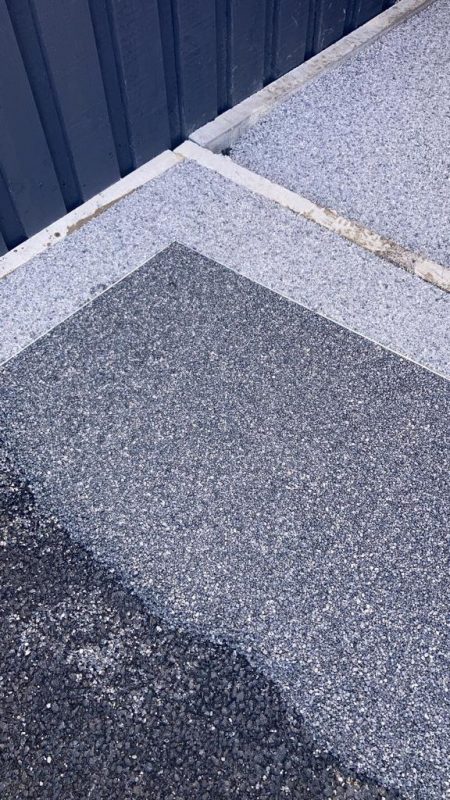
If drainage is a primary concern on your property, particularly in lower-lying gardens or those with existing water management issues, it may be worth comparing tarmac with a fully permeable alternative. Resin bound driveways allow water to pass directly through the surface without any drainage infrastructure, which simplifies both the planning position and the long-term maintenance.
If you already have a tarmac driveway that’s showing its age, understanding what you’re actually seeing helps you make the right decision between repair and full replacement.
| What You’re Seeing | What It Means | Recommended Action |
|---|---|---|
| Surface cracking only (no subsidence) | Oxidation / surface ageing | Crack fill and reseal, or thin overlay |
| Rutting or depressions under tyres | Sub-base weakness or failure | Full replacement with new sub-base |
| Edge crumbling and breaking away | Failed or absent edge restraints | Edge repair and kerb reinstatement |
| Pothole formation | Localised sub-base failure | Patch repair or section replacement |
| General surface fading and roughness | Normal weathering, structurally sound | Sealcoating or thin overlay |
| Large-area cracking / network cracking | Sub-base movement or failure | Full replacement |
An honest contractor will assess your existing drive in person and give you a straight answer about whether an overlay is viable or whether the sub-base needs addressing. An overlay over a failing sub-base, the cheaper short-term option, will reproduce the same failures within two or three years.
The tarmac trade in the north-west has a persistent problem with unreliable operators, the origin of the well-known “driveway scam” trope involving cold callers with surplus material. Avoiding this is straightforward if you know what to look for:
✔ They never cold-call at your door – Reputable local contractors don’t knock unannounced with offers of leftover tarmac. If someone does, decline.
✔ They visit before quoting – No honest contractor prices a tarmac job accurately without seeing the ground, the access, the existing surface, and the drainage requirements.
✔ They specify the job in writing – A proper quote states the excavation depth, the sub-base specification, the number of tarmac courses, the depth of each, and the drainage provision. Vague quotes mean vague work.
✔ They carry full public liability insurance – Ask for the certificate. Any contractor unable or unwilling to provide it should be ruled out immediately.
✔ They have a fixed business address – A local contractor with a verifiable address, phone number, and online presence is far more accountable than a mobile-only operation.
✔ They offer a written workmanship guarantee – Aim for a minimum of five years in writing; ten years from the best operators.
✔ They discuss drainage upfront – If drainage isn’t mentioned in the initial conversation, you should raise it. A contractor who dismisses it as unimportant is cutting a corner that matters.
✅ Measure your driveway area (length × width in metres squared)
✅ Assess the condition of the existing surface, cracks, soft spots, rutting, edge failure
✅ Identify where surface water currently drains and where you want it to go
✅ Decide whether you want a block paving border, and if so, what colour and pattern
✅ Consider whether any adjacent work makes sense at the same time: patios, fencing, or garden walls
✅ Get at least two or three written quotes with specifications stated, not just prices
✅ Ask each contractor to confirm sub-base depth and drainage provision in writing
✅ Check that each contractor has a verifiable local address and public liability insurance
How long does a tarmac driveway last in Altrincham? A properly installed tarmac driveway, correct sub-base depth, appropriate surface course thickness, good edge restraints, and decent drainage, typically lasts 20–25 years. The main variable is sub-base quality: a thin or poorly compacted sub-base shortens that lifespan dramatically. Greater Manchester’s clay soils and regular frost cycles mean that skimping on sub-base preparation is a particularly costly mistake in this area.
How long after laying can I use my tarmac driveway? For foot traffic, usually within a few hours of the surface cooling. For vehicle use, most contractors recommend waiting 24 hours to allow full curing and hardening. In warm weather, tarmac can remain slightly soft for longer, you may notice tyre impressions forming if a vehicle stands stationary for extended periods in direct summer sunshine. This is normal behaviour and not a sign of a poor installation.
Can tarmac be laid in winter? Yes, within limits. Tarmac should not be laid on frozen ground or when ambient temperatures are consistently below 3°C, as the bitumen cools too rapidly for proper compaction. Mild winter days, which are common in Altrincham, are perfectly suitable. A reputable contractor will reschedule if conditions aren’t right rather than push ahead and compromise the result.
Does tarmac need sealing? Not necessarily, but a quality sealcoat applied every five to seven years does meaningfully extend the surface life. Sealing slows the oxidation of the bitumen binder that causes tarmac to become brittle and crack over time, and it restores the surface’s original dark appearance. It’s a low-cost maintenance step that delays the need for resurfacing by several years.
Can I have a coloured tarmac driveway? Standard hot-lay tarmac is black or very dark grey. Red or coloured tarmac, sometimes seen on footpaths and cycle lanes, uses a modified binder and is available for domestic use, though at a cost premium. Most Altrincham homeowners who want visual colour variation opt for a tarmac field with a contrasting block paving border, which achieves a much richer visual result at lower cost than coloured tarmac.
What’s the difference between resurfacing and full replacement? Resurfacing (or overlay) means applying a new layer of tarmac over an existing surface that is structurally sound but cosmetically deteriorated. It’s faster and cheaper than full replacement. Full replacement involves removing the existing surface, assessing and if necessary improving the sub-base, and installing fresh tarmac from scratch. The right choice depends entirely on whether the existing sub-base is still functioning correctly, which is why an in-person assessment by a knowledgeable contractor is essential before committing.
Is tarmac suitable for steep driveways? Yes, with careful planning. A steeply sloped tarmac drive requires precise gradient management, robust edge restraints to prevent the surface from slipping under load, and well-designed drainage to channel water away from the surface efficiently. Texture additives can be incorporated into the surface course mix to improve grip on steep gradients. An experienced contractor will flag any concerns about slope during their site visit.
Do I need planning permission for a tarmac driveway? Potentially, yes, if the tarmac is impermeable (which standard hot-lay tarmac is) and covers more than 5 m² of front garden without draining to a soakaway or permeable area, Trafford Council planning permission is technically required. The practical solution is a drainage channel at the drive entrance connected to an appropriate outlet. Your contractor should assess and specify this as part of the project. If planning permission is needed for any reason, they should flag it clearly before starting work.
Can I get a tarmac driveway and a new patio done at the same time? Absolutely, and it often makes practical and financial sense to combine projects. The contractor is already on site, materials are being delivered, and any shared groundwork (edging, drainage, levels) is done once rather than twice. Many Altrincham homeowners add a new patio to a driveway project and save meaningfully compared to two separate bookings. It also avoids the frustration of having your garden disrupted twice in the same season.
How do I stop weeds growing through my tarmac? Tarmac itself doesn’t allow weeds to grow through the surface, the density of the material prevents it. Weeds establish in tarmac driveways at the edges where the surface meets soil, or through cracks that develop over time. Maintaining clean, properly repointed edges and applying a path weedkiller to perimeter areas once a year prevents 95% of the problem. Prompt crack repair (filling hairline cracks before water gets in and freezes) prevents the crack growth that eventually creates a foothold for larger plant growth.
Tarmac is one of those surfaces that rewards the homeowner who takes it seriously rather than treating it as a default fallback. Specified correctly, installed by a team that knows what they’re doing, and finished with a smart edge detail, a tarmac driveway can look every bit as considered as its more fashionable alternatives, at a fraction of the cost, and with a service life that speaks for itself.
Deluxe Driveways installs tarmac driveways across Altrincham, Hale, Bowdon, Timperley, Sale, and the wider Greater Manchester and Cheshire area for both domestic and commercial clients. We carry out proper site assessments before every quote, specify sub-base depth and drainage in writing, and back all our work with a 10-year guarantee and full public liability insurance.
We also handle everything else your exterior might need — block paving, resin driveways, patios, garden fencing, turfing and artificial grass, decking, and garden walls & steps, so if there’s more to tackle while the team is on site, we can make it happen.
Call 0800 191 0959 for your free no-obligation quote. We’ll visit, assess, give you a straight answer about what your drive actually needs, and provide a written price with a 14-day cooling-off period.

Deluxe Driveways are a property maintenance company with many years of experience in a range of areas. Deluxe Driveways take pride in delivering the quality results which you deserve.
Deluxe Driveways are more than happy to offer FREE, no-obligation quotes. We are here to work closely with you on any projects.
From block paving and resin to patios and deckings, Deluxe Driveways expertise spans across many fields and are on hand to cover you for all of your needs.
Deluxe Driveways's experience in the paving & driveway industry is second to none, we have been around for a while and seen almost everything on the job so you can be confident in hiring us!
Deluxe Driveways cover a wide geographical area including Greater Manchester & Cheshire. Please get in touch to find out if Deluxe Driveways cover your area.
We endeavour to always leave our customers satisfied with our high quality work and this includes causing as little disruption as is possible and leaving your property clean and tidy.
Greater Manchester & Cheshire
30 The Downs Altrincham WA14 2PX