BEST TURFING ALTRINCHAM
Professional Landscapers
Deluxe Driveways all garden & landscaping work. Get in touch for a no-obligation quote!

A good lawn does something to the way a garden feels that nothing else quite replicates. It gives the space scale, it softens the edges of hard landscaping, and, on a sunny afternoon when the grass is freshly cut and the kids are actually outside, it makes a garden feel like the best room in the house.
The problem is that genuinely good lawns, the kind that look effortlessly green and even all year round, don’t happen by themselves. They’re made, through proper soil preparation, the right turf variety, correct installation, and the right aftercare in the first critical weeks. Skip those steps and you end up with the kind of lawn most Altrincham gardens currently have: reasonable in June, patchy by August, and a mud bath from November to March.
This guide will show you how to avoid that cycle entirely. Whether you’re starting from bare soil, replacing a lawn that’s beyond saving, or seriously considering whether artificial grass is finally the right answer, you’ll find everything you need here to make a good decision, and to recognise a contractor who will deliver on it.
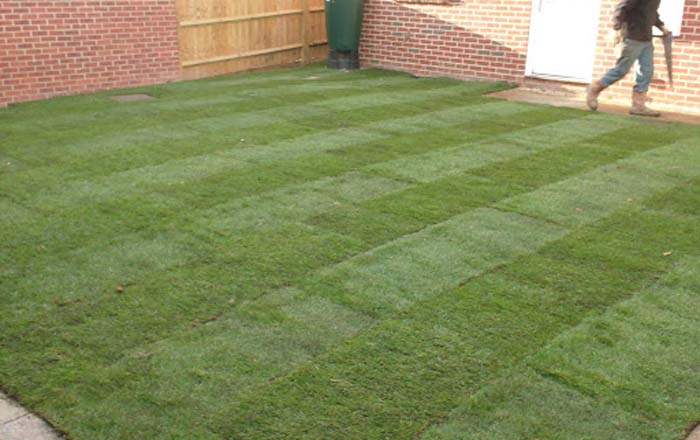
This isn’t a criticism of Altrincham homeowners, it’s a diagnosis of what typically goes wrong. The gardens across WA14, WA15, and M33 face a specific set of challenges that aren’t always obvious until you’re dealing with the consequences.
Heavy clay soil. This is the defining characteristic of much of the ground across Greater Manchester and Cheshire. Clay-heavy soil retains water, which is why so many local gardens become waterlogged in winter, moss-prone in autumn, and bake hard with surface cracking in dry summers. Grass roots struggle to penetrate deeply in clay, which produces a shallow root system that’s vulnerable to drought, wear, and disease.
Shade. Altrincham’s older residential properties, the Edwardian and Victorian semis and detached homes in Bowdon, Hale, and around the town centre, come with mature trees and high perimeter walls that cast significant shade. Ordinary turf varieties struggle in deep or dappled shade; the result is thin, patchy grass that moss colonises progressively.
High use. Family gardens with children and dogs are working environments. Regular traffic across the same areas, particularly in summer when the ground bakes firm and in winter when it stays soft, creates compaction and wear that most lawns can’t recover from season to season without intervention.
Poor original installation. Many Altrincham gardens were turfed when the house was built or last renovated, on whatever sub-soil was left after construction, with minimal preparation. The lawn looked reasonable for a couple of years and has been declining slowly ever since.
Understanding these challenges is the starting point for addressing them properly, rather than just laying new turf over the same problems and expecting a different result.
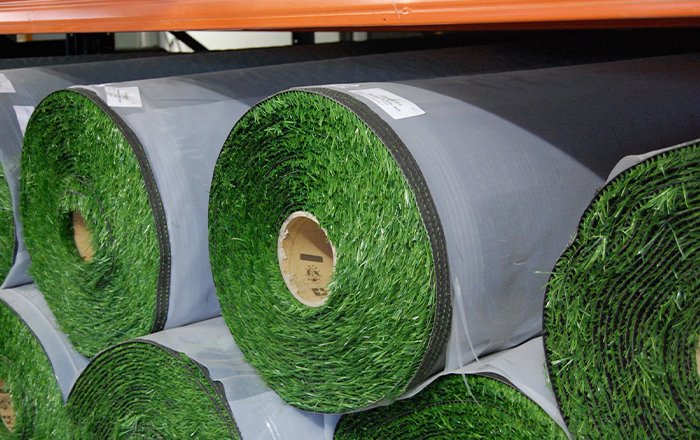
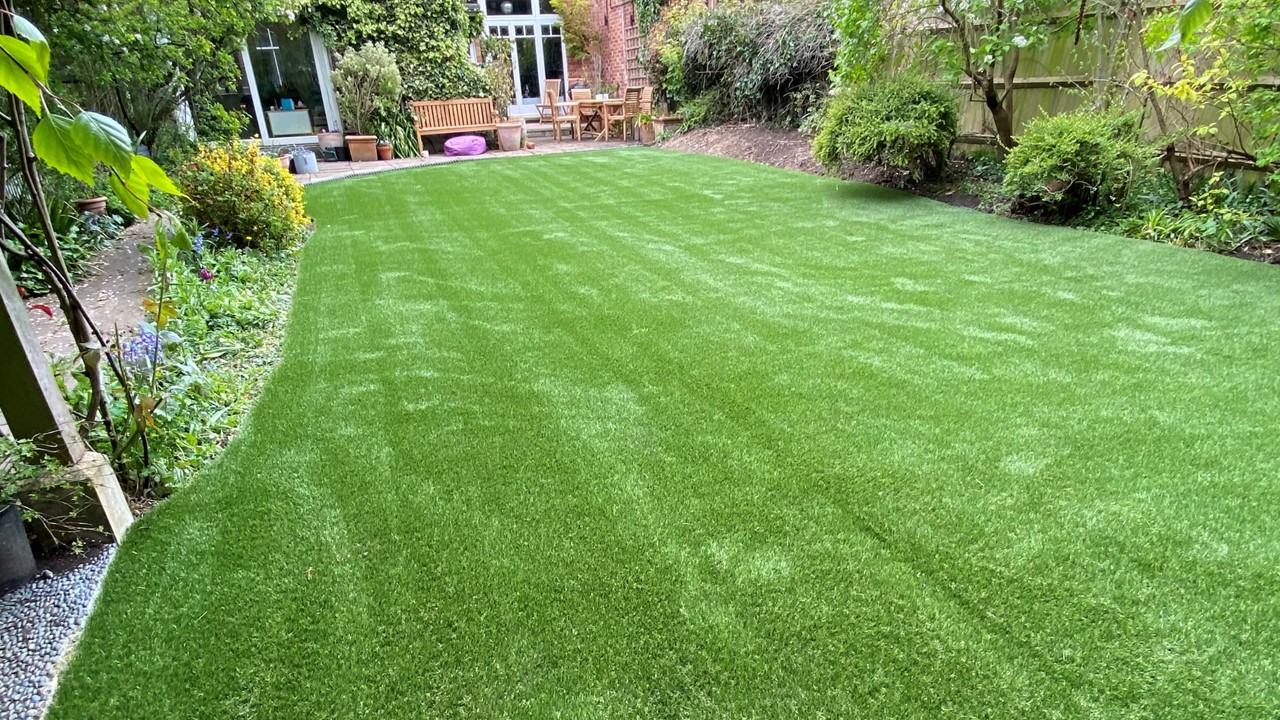
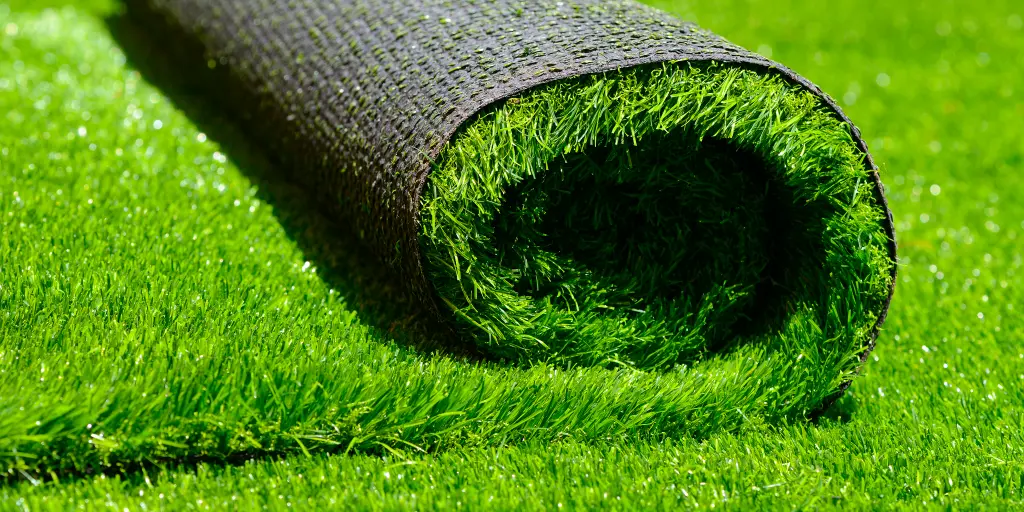
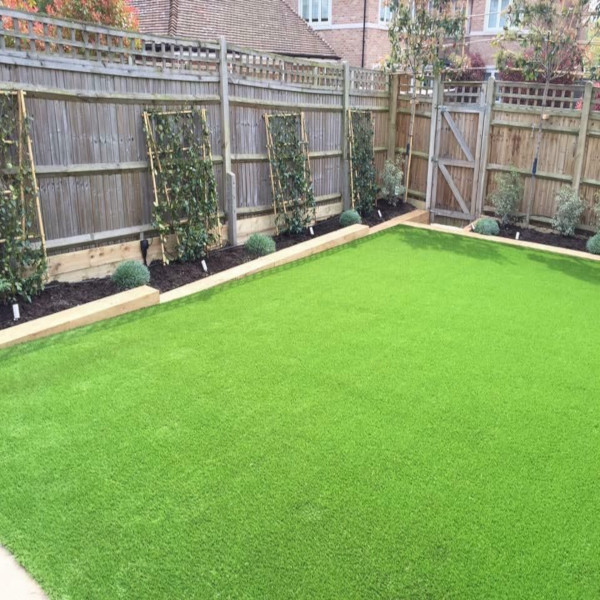
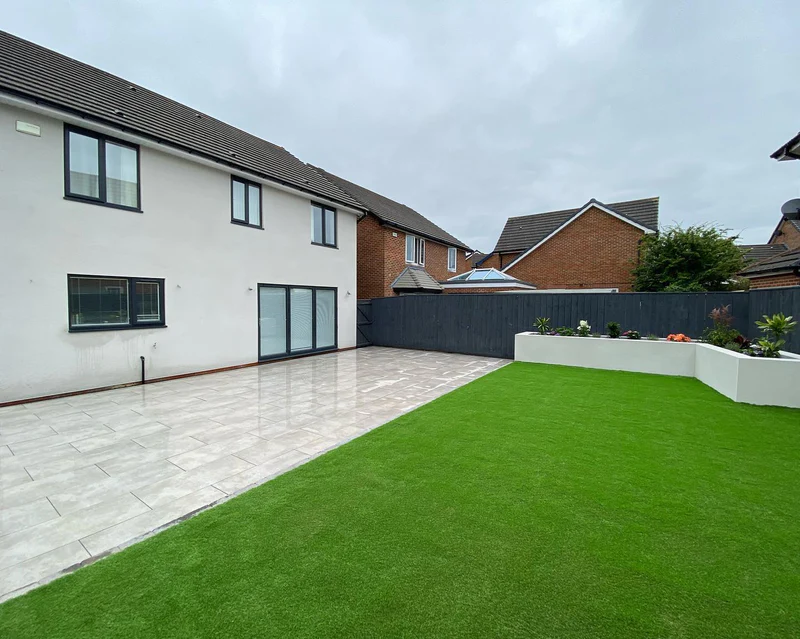
This is the decision most Altrincham homeowners are genuinely uncertain about, and it deserves a straight answer rather than an advocacy piece for one side.
Real turf, properly installed on prepared soil with the right variety for your conditions, is the most satisfying lawn option for homeowners who want an authentic garden. The feel underfoot, the scent on a warm evening, the way it cools the garden in summer, the visual softness it creates, none of this is replicated by artificial alternatives, however good they’ve become.
Real turf is also the better environmental choice: it supports insects, absorbs carbon, contributes to local drainage, and improves soil health over time. For homeowners in Altrincham who care about their garden’s broader ecology, and there are many, this matters.
The honest requirements: real turf needs watering in dry spells, feeding twice a year, mowing weekly in the growing season, and some winter tolerance of reduced appearance in extended frost or waterlogged conditions. It rewards maintenance with genuine seasonal beauty that artificial surfaces don’t match.
Real turf suits: Homeowners who garden actively, properties with good sun access, gardens without heavy year-round pet or child use, and anyone for whom the experience of a natural lawn matters.
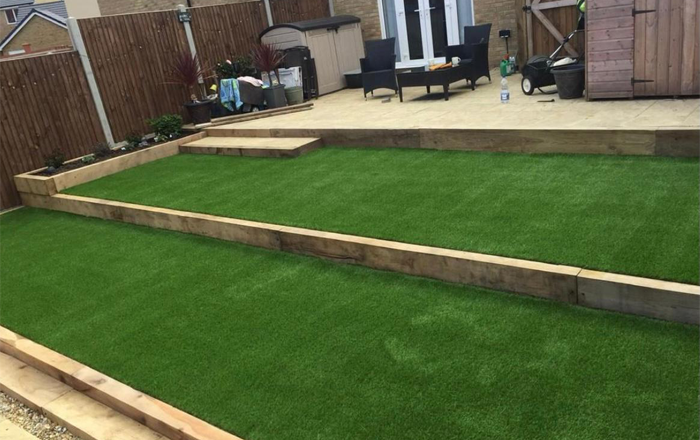
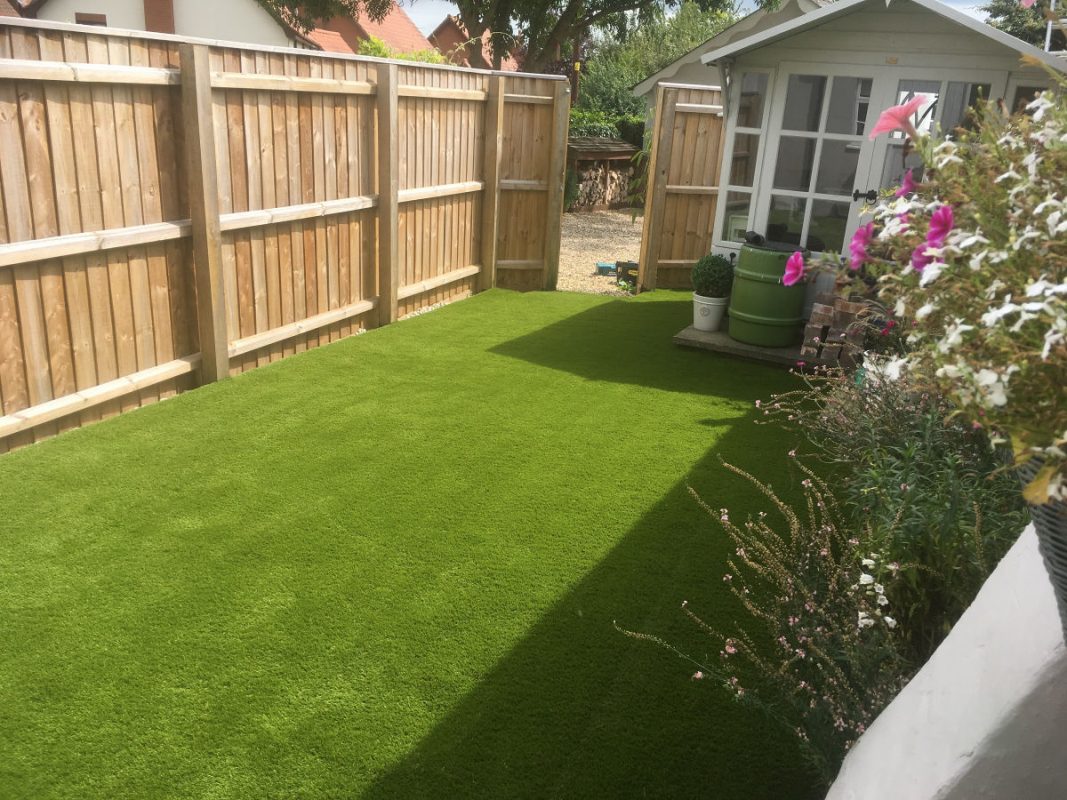
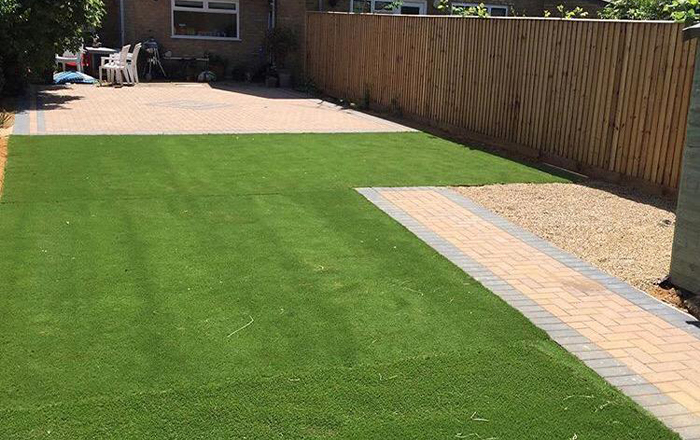
Modern artificial grass has closed the quality gap with real turf dramatically over the past decade. A well-specified artificial lawn from a quality manufacturer, correctly installed with a proper sub-base and adequate drainage, looks convincing in most garden settings, requires almost no maintenance, and performs consistently across every week of the year.
The practical case for artificial grass in Altrincham is strong:
The honest limitations: it retains heat in direct summer sunshine more than real grass, it has a finite lifespan (typically 15–20 years for a quality product), and it doesn’t replicate the sensory experience of a real lawn. It’s also, when properly installed on a correct sub-base, a meaningful upfront investment.
Artificial grass suits: Busy families, dog owners, heavily shaded gardens, gardens where drainage is chronically poor, and homeowners who want a garden that looks good every day with minimal effort.
| Situation | Recommendation |
|---|---|
| Good sun, active garden, some maintenance appetite | Real turf — properly prepared and installed |
| Kids and/or dogs, heavy year-round use | Artificial grass or hardwearing real turf |
| Heavy shade, poor drainage | Artificial grass or shade-tolerant turf with drainage work |
| New-build with builder’s sub-soil | Real turf with full soil preparation, or artificial |
| Low maintenance is the absolute priority | Artificial grass |
| Environmental considerations matter | Real turf with correct soil preparation |
If you’re genuinely uncertain, the right answer often comes down to how much you want to engage with the garden as a living thing, rather than simply have a green space that looks neat.
One of the most common mistakes in lawn installation is treating turf as a commodity, as if all grass rolls are interchangeable and the cheapest available from the local supplier will do the job. Turf varieties are bred for specific conditions and uses; using the wrong variety for your garden’s conditions is how lawns fail within a season.
Predominantly fine fescues and bent grasses. Creates the densely textured, even appearance of a bowling green or premium showgarden lawn. Excellent colour, fine blade texture, and impressive drought resistance once established.
The trade-off: fine turf doesn’t tolerate heavy foot traffic well, takes longer to establish from new, and requires more precise maintenance. Best suited to decorative lawns in sheltered, well-drained gardens where use is moderate.
The workhorse variety for the majority of Altrincham gardens. Predominantly ryegrass with fescue blends, bred for rapid establishment, good recovery from wear, and year-round performance. Less visually perfect than ornamental turf but significantly more resilient to children, dogs, and weekend use.
This is the right choice for most residential installations where the lawn serves a practical purpose as well as a decorative one.
Specialist blends for the deep or dappled shade conditions common in Altrincham’s older gardens. Higher proportions of shade-tolerant fine fescues that require less light to perform. Not as robust as hardwearing varieties but significantly better than standard turf under canopy.
If your garden has areas under mature trees or against north-facing walls where nothing seems to grow, shade turf is the correct specification, not the same hardwearing mix used in the open sections of the garden.
This is where most turfing projects either succeed long-term or set up their own failure. Turf is only as good as the soil it’s rooted in, and genuinely good ground preparation is what distinguishes a professional installation from someone who arrived with a roll of turf and an optimistic attitude.
Before any turf is laid, the soil needs to be assessed for:
Compaction — Clay-heavy Altrincham soil compacts readily. Compacted soil must be broken up (rotovated to a minimum depth of 150mm) to allow root penetration and drainage.
pH level — Grass performs best in soil with a pH between 6.0 and 7.0. A simple soil test reveals whether lime needs to be added to correct acidity (common in our area) or sulphur to lower alkalinity.
Organic content — Sub-soils left by builders, or heavily clay-dominated garden soil, benefit from the incorporation of sharp sand and organic matter (loam or compost) to improve texture, drainage, and fertility.
Drainage — Where chronic waterlogging exists, simple soil improvement won’t solve the problem. A drainage solution, French drains, soakaways, or raised lawn levels, needs to be part of the specification.
A lawn that settles unevenly looks poor and causes mowing difficulties. After rotovation and soil improvement, the area is raked, graded, and firmed to produce a level, consistent surface with a slight fall away from the house. Any hollows, high spots, or irregular areas are addressed at this stage, not after the turf goes down.
Artificial grass cannot simply be laid on soil. A proper installation requires:
Skipping or reducing the sub-base is the most common cause of artificial grass looking uneven, rippling, or developing drainage problems within a couple of years. Any contractor who proposes laying directly onto existing grass or soil should be questioned directly about this.
Professional turfing in Altrincham isn’t the same as professional turfing in Surrey. The specific conditions of the north-west require specific responses:
Timing matters more here than most places. The ideal window for turfing real grass is mid-September to November and March to mid-May, avoiding the coldest winter months and the driest summer period. In Altrincham’s climate, autumn turfing typically establishes the most successfully because the soil retains warmth from summer, rainfall is more reliable, and the grass has the entire winter and spring to establish roots before its first summer challenge.
Clay management is everything. Working clay-heavy soil when it’s wet causes smearing and compaction that takes seasons to resolve. A professional team will schedule groundwork for dry conditions and incorporate sharp sand into preparation as a matter of course.
Shade turf is under-specified across this area. Gardens in Bowdon, Hale, and the tree-lined roads around Altrincham regularly receive enquiries for turf failures under existing tree canopy where standard turf was incorrectly specified. Getting variety selection right at the outset prevents a predictable failure.
A new lawn rarely exists in isolation, and the most satisfying garden transformations treat the lawn as one element of a coherent outdoor space rather than the entire project.
Projects that combine naturally with turfing:
Patios and hard landscaping, The most common combination. A new patio defines the entertaining space; the lawn wraps around and behind it, creating a garden with genuine zones.
Garden walls and raised beds, Raised bed borders around a central lawn create structure and allow planting without encroaching on the grass area. Retaining walls manage sloped gardens that would otherwise produce uneven lawn surfaces.
Fencing and boundaries, A new lawn alongside existing tired boundary fencing looks incongruous. Combining fencing replacement with a turfing project creates a properly finished garden.
Decking, An upper deck level with lawn below, or a deck at one end of a long garden with lawn running toward it, creates a multi-level outdoor space that makes larger gardens feel purposefully designed.
Drainage improvements, Where the garden has a chronic waterlogging problem, proper drainage installation, French drains, soakaways, or level re-grading, is the prerequisite that makes any lawn viable long-term.
The advantage of combining projects is straightforward: the team is on site, the ground is already being worked, and the finished result is a coherent garden rather than a series of individual jobs done at different times by different people.
New real turf is an investment that needs protecting in its first critical weeks. A professional installation doesn’t end when the last roll is laid.
Week 1–2:
Week 3–4:
Week 5–6:
Week 7–8:
Common aftercare mistakes:
✔ They assess the soil before quoting — Ground conditions vary significantly across Altrincham’s clay-heavy soils. A site visit that includes digging a small test hole to assess soil depth, drainage, and compaction is a sign of a contractor who takes the preparatory work seriously.
✔ They specify soil improvement in the quote — The quote should state what soil preparation is included: rotovation depth, topsoil or sharp sand addition, pH testing, drainage assessment. A quote that just says “supply and lay turf” is not quoting the same job as one that specifies full preparation.
✔ They recommend the correct turf variety for your conditions — A contractor who asks about shade levels, drainage, and how the lawn is used before recommending a variety is demonstrating product knowledge. One who quotes the same variety regardless of conditions is not.
✔ They explain aftercare honestly — A professional will give you clear written aftercare instructions and be honest about the watering commitment required in the first two weeks. Anyone who doesn’t mention aftercare is setting you up for disappointment.
✔ They carry full insurance and offer a written guarantee — Workmanship guarantee, public liability insurance, in writing before work starts.
✅ Measure the lawn area (length × width in metres squared)
✅ Identify problem areas, waterlogging, heavy shade, compaction, existing debris
✅ Decide whether real turf or artificial grass is your likely preference
✅ Note whether any adjacent landscaping (patio, walls, fencing) should be done simultaneously
✅ Consider the best timing, autumn or spring for real turf installation
✅ Ask each contractor to specify turf variety and soil preparation in writing
✅ Request at least three quotes with full preparation specifications
✅ Ask to see a local installation that is at least one full growing season old
When is the best time to lay turf in Altrincham? The two optimal windows are mid-September to November and March to mid-May. Autumn is generally the better of the two in the north-west, soil temperature remains warm from summer, encouraging rapid rooting, and rainfall is more reliable, reducing the watering burden in those critical first weeks. Summer turfing is possible but requires consistent, committed watering in the first month. Avoid laying turf on frozen or waterlogged ground.
How long does new turf take to establish? With proper ground preparation and consistent watering, new turf typically roots to the soil within three to four weeks. Full establishment, where the lawn behaves like a mature, fully rooted grass, takes one complete growing season. During that first season, the lawn benefits from careful management: conservative mowing heights, continued attention to watering in dry spells, and avoiding heavy use until the root system has properly developed.
Can I turf over an existing lawn? This is possible but rarely advisable. Laying new turf over an existing lawn traps the old grass beneath, which creates an anaerobic layer that inhibits rooting, harbours disease, and produces an uneven surface as the old material decomposes at different rates. The correct approach is to strip the existing lawn completely, prepare the soil, and lay new turf on a clean, properly prepared surface. The additional work pays back within the first season.
How long does artificial grass last? A quality artificial grass product, correctly installed on a proper sub-base, typically lasts 15–20 years. Product quality varies enormously, cheaper products use lower-quality UV-stable coatings that fade and degrade faster, and lighter backing materials that become brittle over time. Specifying a quality product from a reputable manufacturer is far more important than it appears at the quoting stage.
Is artificial grass suitable for children and pets? Yes, modern artificial grass is manufactured to be child and pet safe. It’s non-allergenic, soft enough for play, and drains surface liquid quickly. For dog owners specifically, it’s significantly more practical than real turf in heavy-use gardens, it won’t develop bare patches, won’t create mud in wet weather, and can be cleaned easily with water. The main consideration for pet owners is infill specification, rubber crumb infill is effective but can retain heat in direct sunshine; silica sand infill is cooler but may compact over time.
Will artificial grass get too hot in summer? In direct full sun on a very hot day, artificial grass does retain more heat than real turf. This is a genuine consideration for south-facing gardens. Modern products include heat-reducing technologies in the infill or fibre construction, and the practical reality in Altrincham’s climate, where prolonged intense heat is relatively rare, is that this is rarely a significant day-to-day issue. Positioning the garden to include shaded zones, pergolas, or planting helps manage this during the occasional hot spell.
Do I need drainage under artificial grass? Yes, proper drainage is essential. A well-specified artificial grass installation includes a permeable weed membrane, a compacted free-draining sub-base (MOT hardcore or granite dust), and a drainage path for surface water. Without it, water pools beneath the grass surface, creates an unstable base that causes rippling and surface irregularity, and becomes a breeding ground for moss and algae underneath the backing.
Can real turf be laid in winter in Altrincham? Turf can be laid year-round in mild conditions, but should not be laid onto frozen ground or during periods of sustained frost. The primary risk in winter laying is that frozen ground prevents the turf from making proper contact with the soil. In practice, many Altrincham winters offer enough mild spells between November and February for a skilled team to complete an installation, particularly on south-facing gardens that defrost quickly. Your contractor should assess ground conditions on the day and reschedule rather than proceed onto frozen ground.
How do I stop moss and weeds in my lawn? Prevention is far more effective than treatment. A healthy, dense lawn, properly fed, correctly aerated, and mowed to an appropriate height, simply doesn’t leave the space or light availability that moss and weeds need. Specific steps: annual scarification removes the thatch layer that moss colonises; autumn aeration and top dressing with sharp sand improve drainage in compacted clay soils; consistent autumn and spring feeding maintains grass density. A lawn that’s thinning, waterlogged, or heavily shaded will develop moss regardless of treatment, the underlying cause needs addressing, not just the symptom.
Can you combine turfing with a new patio installation? Absolutely, and it’s one of the most natural project combinations. Having the patio and lawn completed simultaneously means ground levels are coordinated properly from the outset, the edge between hard and soft landscaping is clean and deliberate, and the entire garden is transformed in a single project rather than in stages. Visit our patios page to explore what’s possible when both elements are designed together.
Whether it’s a fresh real lawn on properly prepared Altrincham soil, a quality artificial grass installation that looks great in January and July alike, or a full garden landscaping project that transforms the whole space at once, the difference between a garden that disappoints and one that genuinely delivers comes down to two things: preparation and the people doing it.
Deluxe Driveways provides professional turfing and landscaping services across Altrincham, Hale, Bowdon, Timperley, Sale, and the wider Greater Manchester and Cheshire area. Every project starts with a proper site assessment, every quote specifies the preparation included, and every installation comes with honest aftercare guidance and a 10-year workmanship guarantee backed by full public liability insurance.
We also handle the full garden picture alongside your new lawn, patios, garden walls, fencing, decking, and driveways, so if now is the moment to tackle the whole garden, we can make it happen in one project.
Call 0800 191 0959 for your free no-obligation quote, or fill in our contact form and we’ll be back in touch within one working day.

Deluxe Driveways are a property maintenance company with many years of experience in a range of areas. Deluxe Driveways take pride in delivering the quality results which you deserve.
Deluxe Driveways are more than happy to offer FREE, no-obligation quotes. We are here to work closely with you on any projects.
From block paving and resin to patios and deckings, Deluxe Driveways expertise spans across many fields and are on hand to cover you for all of your needs.
Deluxe Driveways's experience in the paving & driveway industry is second to none, we have been around for a while and seen almost everything on the job so you can be confident in hiring us!
Deluxe Driveways cover a wide geographical area including Greater Manchester & Cheshire. Please get in touch to find out if Deluxe Driveways cover your area.
We endeavour to always leave our customers satisfied with our high quality work and this includes causing as little disruption as is possible and leaving your property clean and tidy.
Greater Manchester & Cheshire
30 The Downs Altrincham WA14 2PX