BEST RESIN DRIVEWAYS ALTRINCHAM
Expert Pavers
Deluxe Driveways undertake all resin bound driveway work. Get in touch for a no-obligation quote!

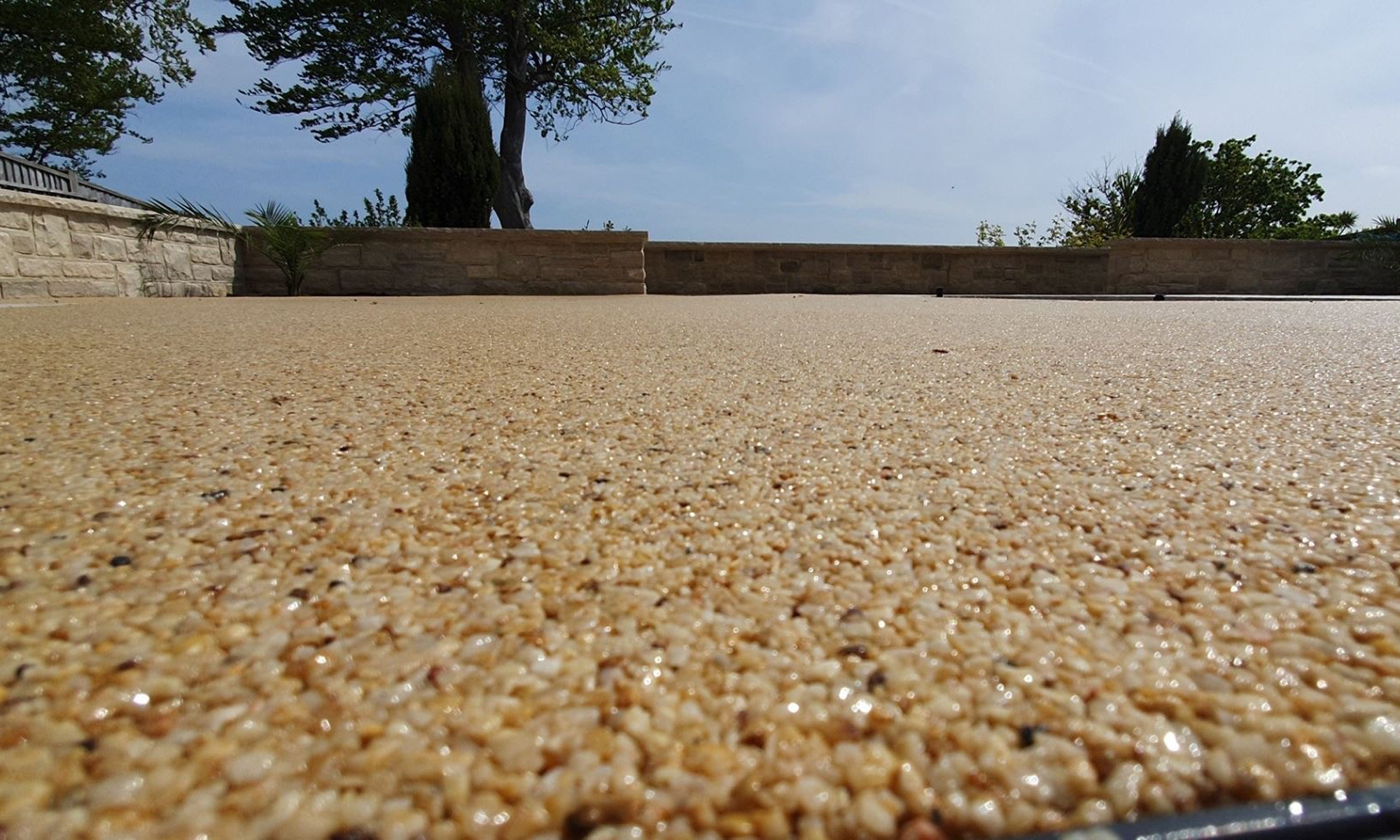
There’s a particular kind of driveway you’ll notice more and more as you drive through the smarter streets of Hale, Bowdon, and the residential roads around Altrincham town centre. Smooth and seamless, with a subtle texture that catches the light. No visible joints, no loose stones scattering onto the pavement, no patches of green algae gathering in the corners. It looks expensive, and considered, without being ostentatious.
That’s resin bound surfacing. And while it’s become the go-to premium driveway choice for Altrincham homeowners over the past few years, there’s still a great deal of confusion about what it actually is, how it performs in the long term, and whether it genuinely justifies the price premium over traditional alternatives.
This guide answers all of it, honestly, practically, and without the sales gloss. By the end, you’ll know exactly how resin bound driveways work, which aggregate colours suit your property, what a realistic installed cost looks like in WA14 and WA15, and precisely what questions to ask before any contractor starts mixing resin on your forecourt.
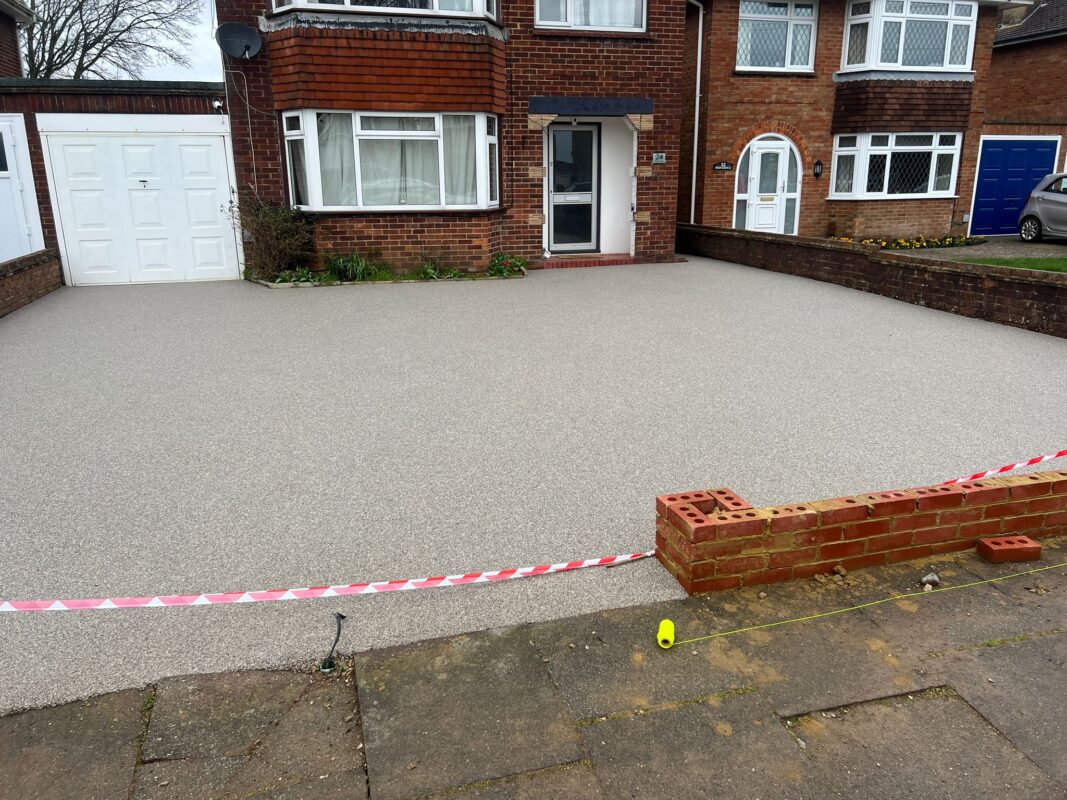
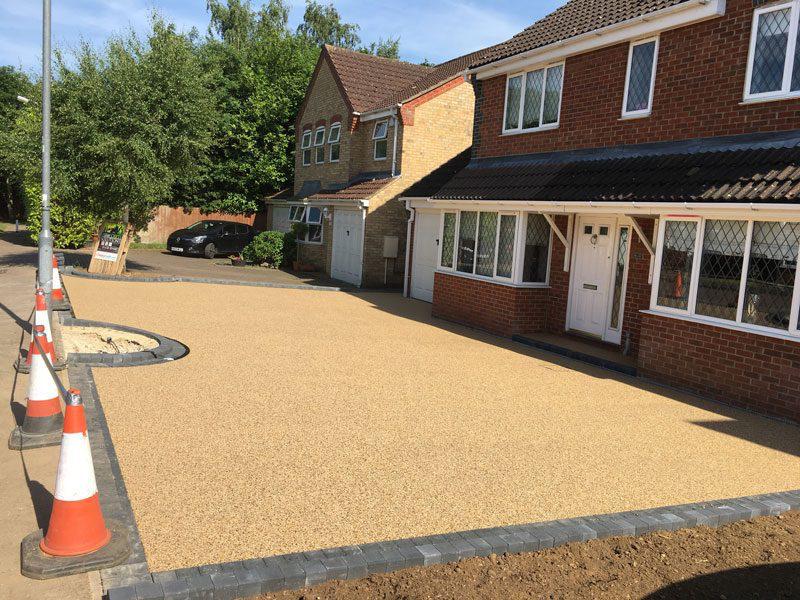
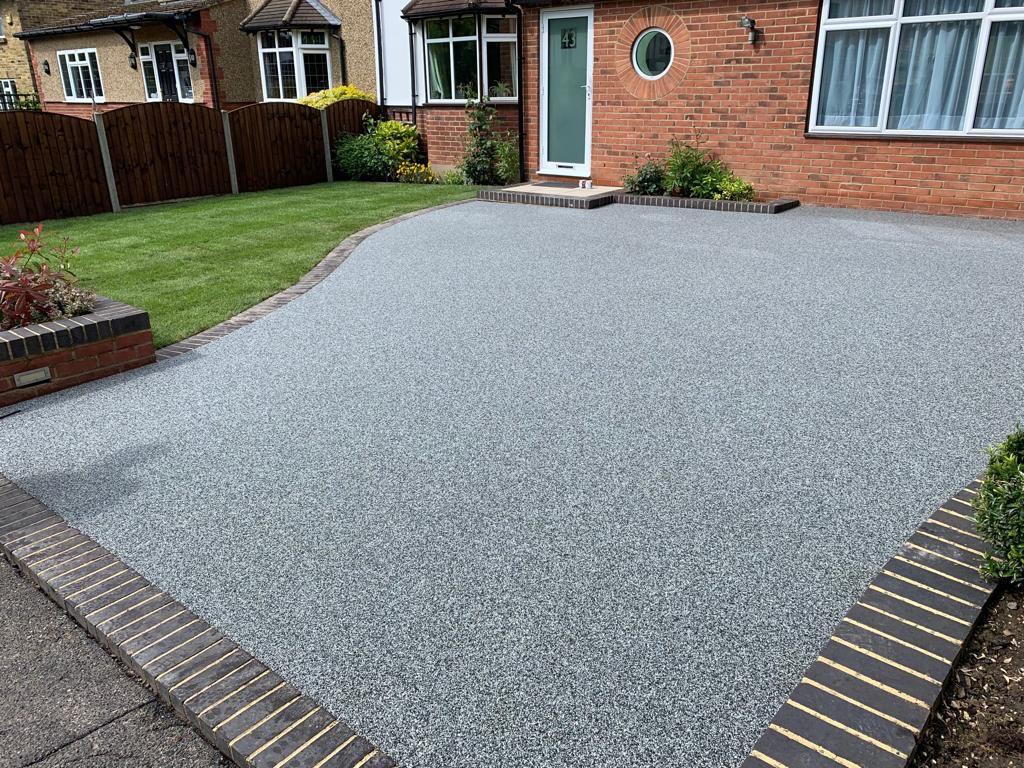
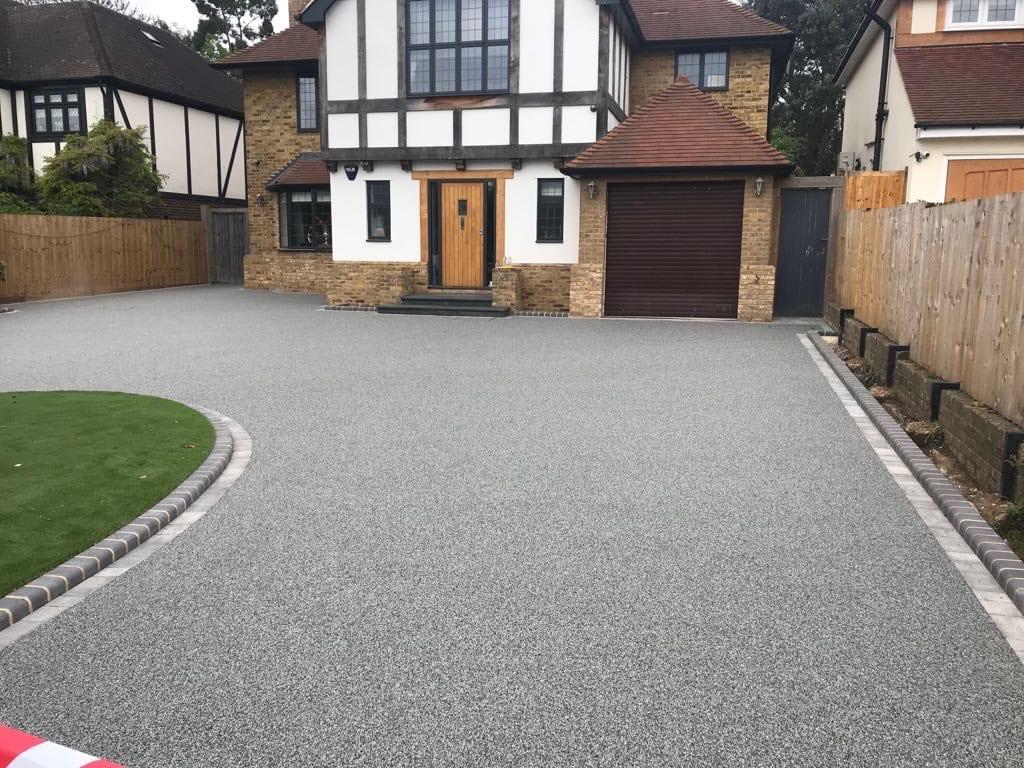
The timing of resin’s popularity isn’t coincidental. Three things converged that made it the natural choice for this part of Greater Manchester.
First, Altrincham’s housing stock is aspirational. Properties across Hale, Bowdon, Timperley, and the conservation-edged streets near the town centre are owned by people who care about how their homes look. When a premium surface became available that genuinely matched the quality of the property it sat in front of, it found its audience immediately.
Second, the planning rule change in 2008 made permeable surfaces actively preferable for front garden driveways. Resin bound surfacing, which allows rainwater to drain through the surface naturally, sidestepped the planning permission requirement that caught many homeowners out when replacing impermeable surfaces. In an area like Trafford, where the Victorian and Edwardian drainage infrastructure already carries significant load on a wet day, that permeability isn’t just a legal convenience, it’s genuinely sensible engineering.
Third, resin bound technology matured. Early installations from the mid-2000s had patchy quality, inconsistent mixing, UV fading, and adhesion failures gave the surface a mixed reputation. Modern UV-stable resin systems, applied correctly by experienced teams, perform entirely differently. Today’s resin driveways installed to the right specification genuinely deliver on their promise.
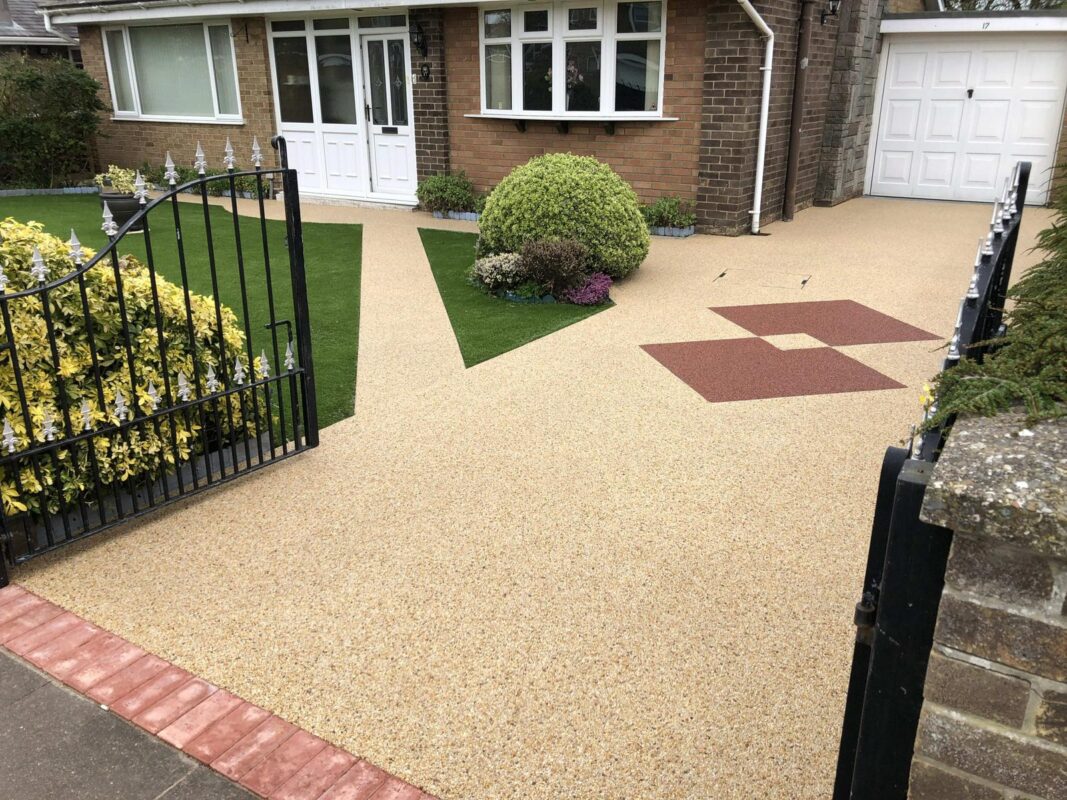
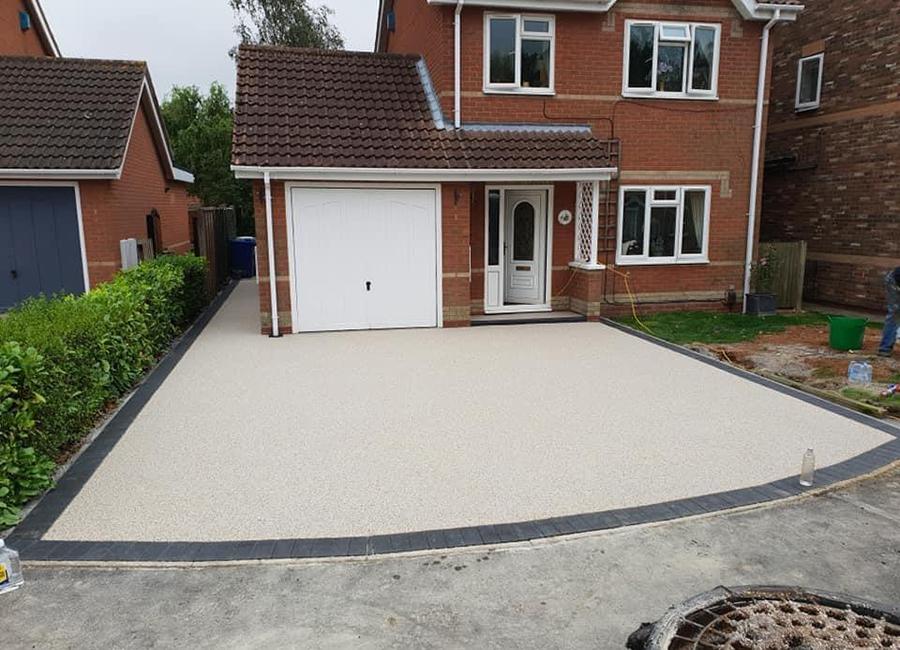
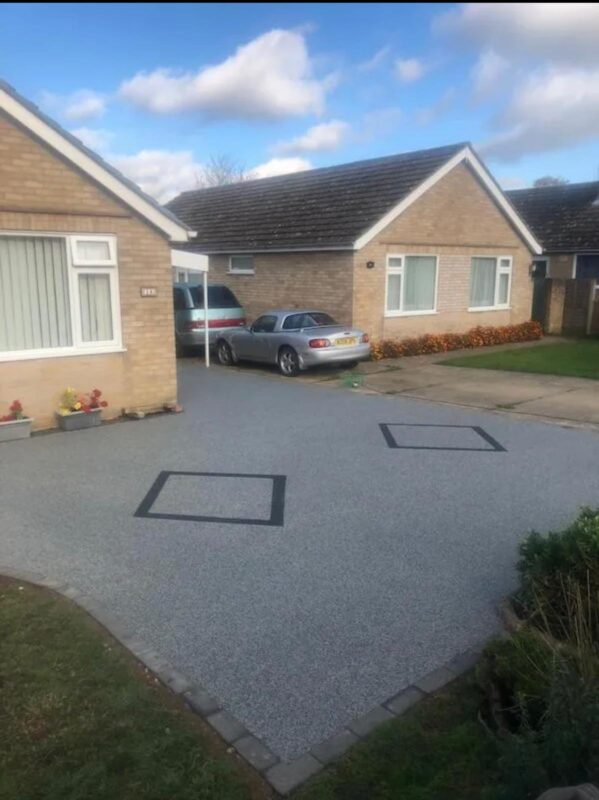
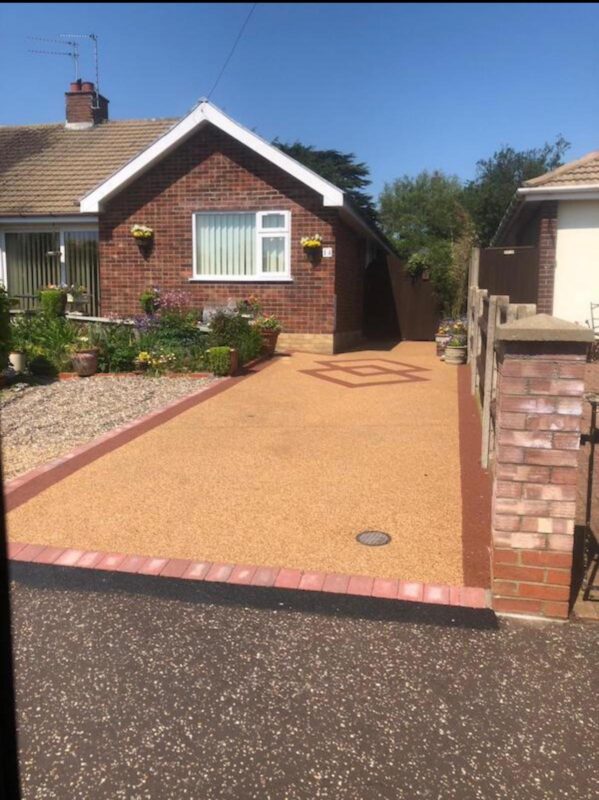
This distinction trips up more homeowners than almost any other in the driveway industry, and getting it wrong is an expensive mistake.
Resin bound: Aggregate stones and resin are thoroughly mixed together before being applied to the prepared base as a single combined material. The stones are fully encapsulated in resin, creating a smooth, seamless, and fully permeable surface. Stones cannot come loose because they are locked within the resin matrix.
Resin bonded: Resin is applied to the surface first as a sticky layer, then loose aggregate is scattered on top and pressed in. The finish looks similar in photographs but performs very differently. The surface is not permeable, stones can become dislodged over time, and the texture is rougher and less consistent.
The practical upshot: Always specify resin bound when asking for quotes. Any contractor who doesn’t distinguish between the two, or who quotes for resin bonded when you’re expecting resin bound, is either inexperienced or hoping you won’t notice the difference. Resin bound is the correct product for a premium permeable driveway, always.
The visual character of a resin bound driveway comes almost entirely from the aggregate, the natural stone mixed into the resin. Understanding your aggregate options is the single most important design decision you’ll make.
The most commonly used aggregates in high-quality resin bound driveways include:
Aggregate is typically graded by size, 1–3mm, 2–5mm, or larger. Finer grades create a smoother surface; coarser grades have more visible texture and grip. For domestic driveways, a 2–3mm or 3–5mm grade is the most common specification.
Beyond aesthetics, here’s what resin bound surfacing actually delivers day to day.
Resin bound surfaces allow rainwater to pass through the surface and into the sub-base, then drain naturally into the ground. This makes them fully compliant with Trafford Council’s permitted development rules for front garden surfacing without any additional drainage infrastructure. There’s no need for a soakaway, no linear drain across the entrance, and no planning application, the surface itself handles the drainage requirement.
Because the aggregate is fully encapsulated in resin with no open joints, there is nowhere for weed seeds to germinate. This is a significant practical advantage over block paving, where joint maintenance and weed control are a recurring annual commitment. A resin bound driveway requires nothing more than an occasional jet wash to look its best.
Two of the most common complaints about driveways, gravel migrating onto the road and standing water after heavy rain, are both solved by resin bound surfacing. The stones simply cannot move; they’re locked in place. And the permeable surface drains water straight through, eliminating the standing water that accumulates on poorly-graded tarmac or concrete.
A standard domestic resin bound driveway is typically installed and cured within 24–48 hours. The resin is mixed and applied, then allowed to cure before vehicle use. This is faster than block paving (2–4 days) and comparable to tarmac. If you need to use your driveway quickly, or if you want to minimise disruption, resin is a genuinely practical choice.
Those last three words are doing the most work in that heading. A properly specified and installed resin bound driveway, correct base, correct resin-to-aggregate ratio, UV-stable resin, applied at the right temperature and humidity, will last 15–25 years with minimal maintenance. An incorrectly installed one, or one installed by a less experienced team cutting corners on base preparation or resin specification, may show cracking, lifting, or colour fade within two or three years.
This is why contractor selection matters more with resin than with any other surface. The product is genuinely excellent, but the quality gap between good and poor installation is wider than for block paving or tarmac.
Resin bound surfacing does not flex. Unlike block paving, which distributes load through the movement of individual blocks, resin forms a rigid monolithic surface. This means it will reflect any weakness or movement in the base beneath it, a crack in the sub-base will eventually telegraph through to the surface above.
The required base specification for resin bound surfacing is:
Clay-heavy soils, common across parts of Timperley, Sale, and lower-lying areas of the Bollin Valley, are particularly susceptible to seasonal movement. On these ground types, a deeper compacted sub-base is often specified to guard against frost heave and ground movement. An experienced local installer will recognise this and adjust their specification accordingly.
This is one of the most common questions homeowners ask, and the answer determines a significant portion of the total project cost.
Existing tarmac: Generally excellent as a resin base, provided the tarmac is structurally sound. If the tarmac is cracked, sunken, or soft in areas, those sections must be repaired or the full tarmac must be replaced before resin can be applied.
Existing concrete: Also suitable, provided the concrete is crack-free and well-bonded. A thorough inspection by the contractor is essential, even small hairline cracks in concrete can cause resin failure over time.
Existing block paving: Block paving can technically be overpaid with resin, but it’s rarely recommended. The joints create weak points, and any movement in the blocks will cause cracking in the resin above. In most cases, block paving should be lifted and a fresh base installed.
Gravel or bare ground: Not suitable as a direct base. Full excavation and a new compacted sub-base will be required.
A reputable contractor will always assess your existing surface in person and be transparent about whether an overlay is genuinely viable or whether preparation work is needed to give the resin installation a proper foundation.
With resin, installer quality matters more than with almost any other driveway surface. The material is unforgiving of poor preparation, incorrect mixing ratios, or application in unsuitable weather conditions. These are the markers of a contractor you can trust:
✔ They assess the existing base in person – No credible resin installer prices a job without inspecting the existing surface condition and ground conditions.
✔ They specify the resin system by name – Ask which resin product they use. A professional will name their supplier and be able to explain why they use that product. Vague answers about “premium resin” are a warning sign.
✔ They discuss UV stability explicitly – In the north-west’s climate, UV-stable resin is non-negotiable for long-term colour retention. If a contractor doesn’t mention it, ask directly.
✔ They won’t install in cold or wet conditions – Resin must be applied above 5°C and in dry conditions for proper curing. A contractor willing to lay resin in marginal weather is prioritising their schedule over your installation quality.
✔ They offer a written guarantee of at least 10 years – Workmanship guarantees should be in writing, not verbal.
✔ They carry full public liability insurance — Request the certificate before work starts.
✔ They have local portfolio examples — Ask to see installations in Altrincham, Hale, or Timperley that are at least two to three years old. Long-term performance tells you far more than a freshly-laid job.
✅ Measure your driveway area (length × width in metres squared)
✅ Identify the condition of the existing surface, sound tarmac or concrete may be suitable as a base
✅ Consider your property style and shortlist two or three aggregate colour options
✅ Note any drainage concerns or areas where water currently pools
✅ Ask whether you want to combine with a new patio, garden walls, or fencing at the same time
✅ Request at least two or three written quotes with specifications clearly stated
✅ Ask each contractor to name the resin system they use and confirm it is UV-stable
✅ Ask to see a local installation that is at least two years old before committing
How long does a resin bound driveway last? When installed correctly on a sound, well-prepared base with a quality UV-stable resin system, a resin bound driveway typically lasts 15–25 years. The wide range reflects how significantly installation quality affects longevity. A top-spec installation on a fresh permeable base will consistently outperform a budget overlay on a marginal existing surface. The contractor you choose matters enormously with this particular surface.
Does a resin driveway need planning permission in Altrincham? No, resin bound surfaces are fully permeable, which means they comply with the permitted development rules for front garden surfacing without any planning application to Trafford Council. This is one of their key practical advantages over impermeable surfaces like plain tarmac or concrete. Always confirm your installation is genuinely resin bound (not bonded) to maintain this benefit.
Can resin be laid over my existing tarmac or concrete? Yes, provided the existing surface is structurally sound, no significant cracking, no movement, no delamination or lifting. A competent contractor will inspect the existing surface carefully before committing to an overlay approach. Even small hairline cracks can cause problems over time, so transparency about existing surface condition is essential before the project starts.
Will resin driveways crack? Resin bound surfacing can crack if the base beneath it moves or settles. The material itself has some flexibility but does not move with the ground in the way that block paving does. The most common causes of cracking are inadequate sub-base preparation, installation over a failing existing surface, or ground movement in clay-heavy soils. This is why correct base specification, not just the resin product itself, is the most important factor in a long-lasting installation.
How do I clean and maintain a resin driveway? Maintenance is genuinely minimal. An occasional jet wash at low-to-medium pressure will remove dirt, algae, and tyre marks. Avoid high pressure, which can damage the surface over time. No sealing, jointing, or annual treatment is required, this is one of resin’s most appealing practical advantages over block paving. If any moss or algae establishes in a shaded area, a diluted path treatment applied and rinsed off is all that’s needed.
What happens if part of my resin driveway is damaged? Unlike block paving, individual damaged sections of resin cannot simply be lifted and replaced as distinct units. Repairs to resin bound surfaces involve cutting out the affected area, repairing the underlying base if necessary, and applying fresh resin and aggregate to the section. Colour matching is generally very good but a visible repair line may be present in some light conditions. For this reason, prompt attention to any base issues that might cause cracking is worthwhile, prevention is far better than repair with resin.
Is resin slippery when wet? No, this is one of the persistent myths about resin bound surfacing. The aggregate creates a naturally textured surface with good slip resistance, including when wet. Coarser aggregate grades (3–6mm) provide more grip than finer grades; if slip resistance is a specific priority, for example, on a sloped driveway, your contractor can recommend the appropriate aggregate grade and size.
How long after installation can I use my driveway? Resin bound surfaces typically cure within 24 hours for foot traffic and light use, with full vehicle weight bearing possible within 24–48 hours depending on temperature and conditions. Your installer will advise on the specific curing time for your installation based on weather conditions at the time of laying. This makes resin one of the faster surfaces to return to use, comparable to tarmac and faster than block paving.
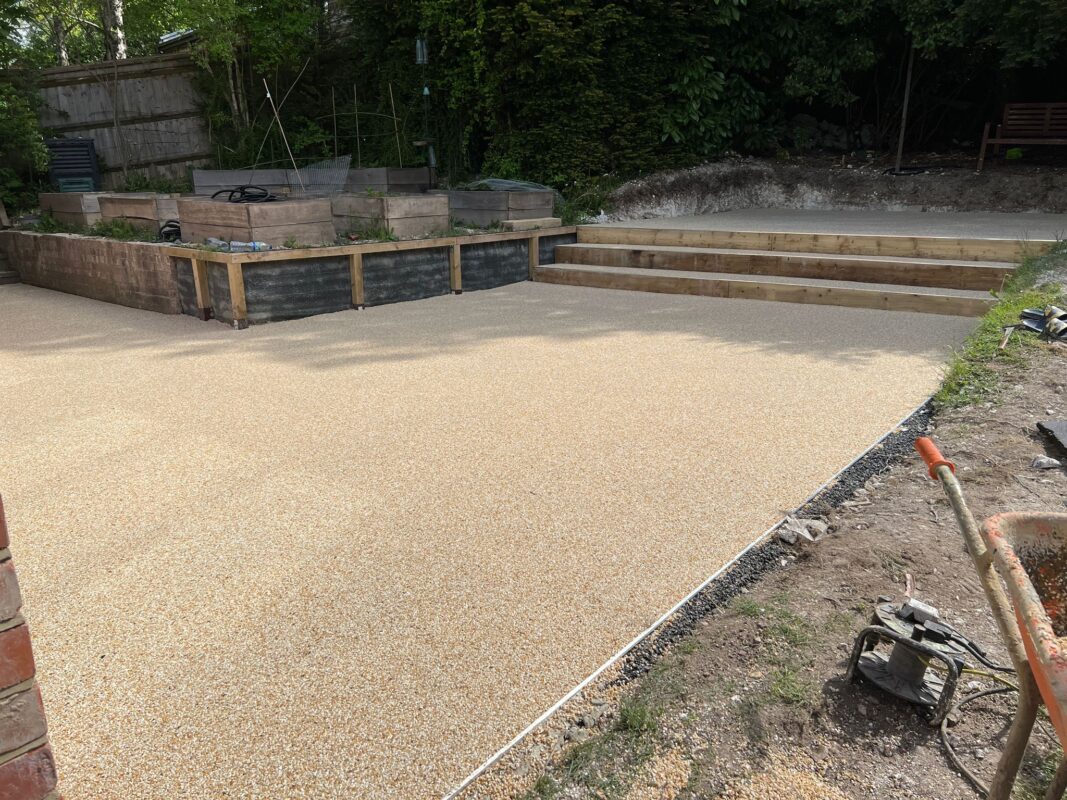
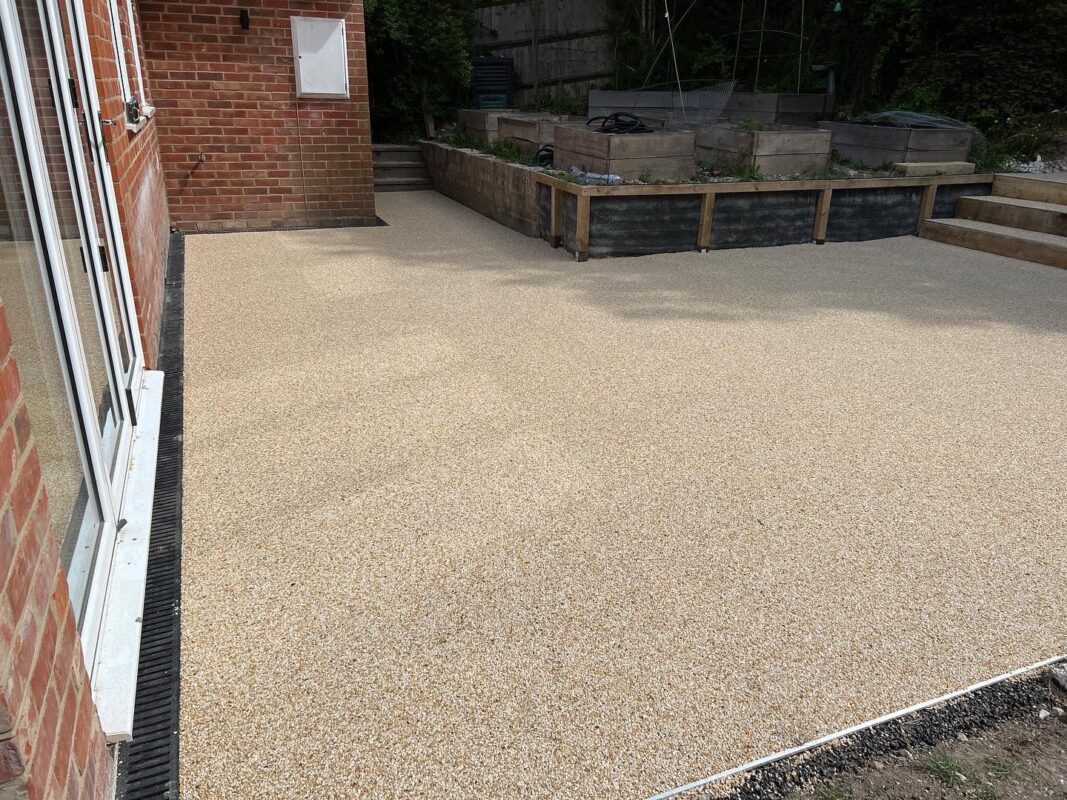
Can resin be used for paths and patios as well as driveways? Absolutely, resin bound surfacing works equally well for garden paths, patio areas, pool surrounds, and decorative garden features. Its seamless, weed-free finish and low maintenance profile make it a genuinely attractive option beyond the driveway itself. Many Altrincham homeowners who have a resin driveway installed also add a resin path leading around to the rear garden, creating a cohesive look throughout the exterior.
What colours are most popular for resin driveways in Altrincham? In the Altrincham area, warm buff and golden tones remain perennially popular, they complement the red-buff Trafford brickwork found on so many local properties. Silver grey and graphite blends have grown strongly in recent years, particularly on more contemporary homes and those with rendered facades. Bespoke blended aggregates, combining two or three complementary tones, are increasingly popular for homeowners who want something that reads as genuinely individual.
Resin bound surfacing done properly is one of the most satisfying home improvements you can make. It’s fast, low-maintenance, drainage-compliant, and, if you get the aggregate colour right, it can make your home look genuinely exceptional from the street.
The key, as with any premium surface, is the quality of the contractor behind it. Deluxe Driveways has been installing resin bound driveways across Altrincham, Hale, Bowdon, Timperley, and the wider Greater Manchester and Cheshire area for years. Every installation uses UV-stable resin systems, every base is assessed properly before the resin is ever mixed, and every job comes with a 10-year workmanship guarantee and full public liability insurance.
We also cover everything else your exterior might need at the same time – block paving, tarmac driveways, patios, garden fencing, artificial grass and turfing, decking, and garden walls & steps.
Call us on 0800 191 0959 for a free, no-obligation quote. We’ll visit, assess your existing surface honestly, and give you a written price with no pressure and a 14-day cooling-off period.

Deluxe Driveways are a property maintenance company with many years of experience in a range of areas. Deluxe Driveways take pride in delivering the quality results which you deserve.
Deluxe Driveways are more than happy to offer FREE, no-obligation quotes. We are here to work closely with you on any projects.
From block paving and resin to patios and deckings, Deluxe Driveways expertise spans across many fields and are on hand to cover you for all of your needs.
Deluxe Driveways's experience in the paving & driveway industry is second to none, we have been around for a while and seen almost everything on the job so you can be confident in hiring us!
Deluxe Driveways cover a wide geographical area including Greater Manchester & Cheshire. Please get in touch to find out if Deluxe Driveways cover your area.
We endeavour to always leave our customers satisfied with our high quality work and this includes causing as little disruption as is possible and leaving your property clean and tidy.
Greater Manchester & Cheshire
30 The Downs Altrincham WA14 2PX